The Last Day of “Summer”

96 days until Thanksgiving.

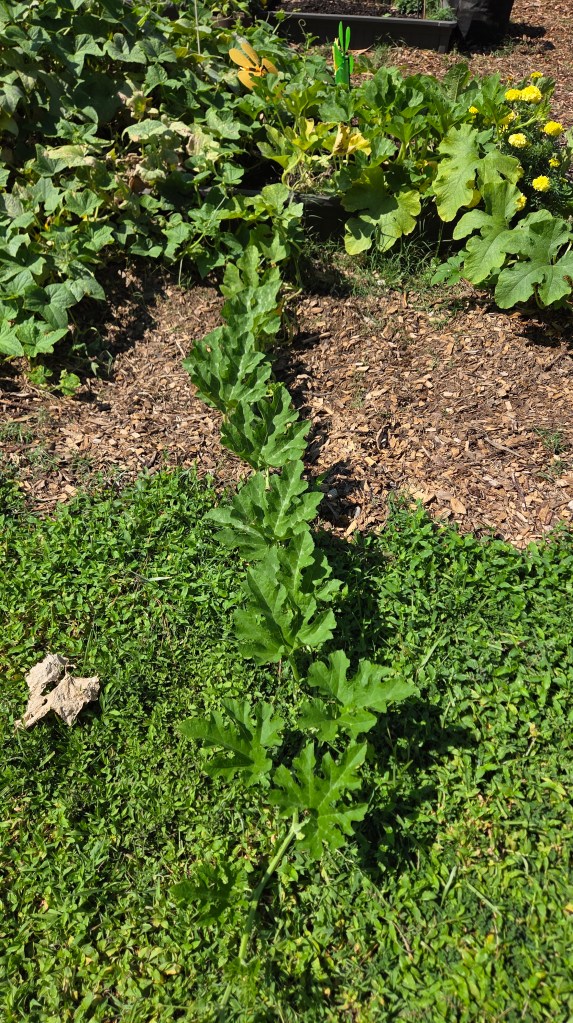
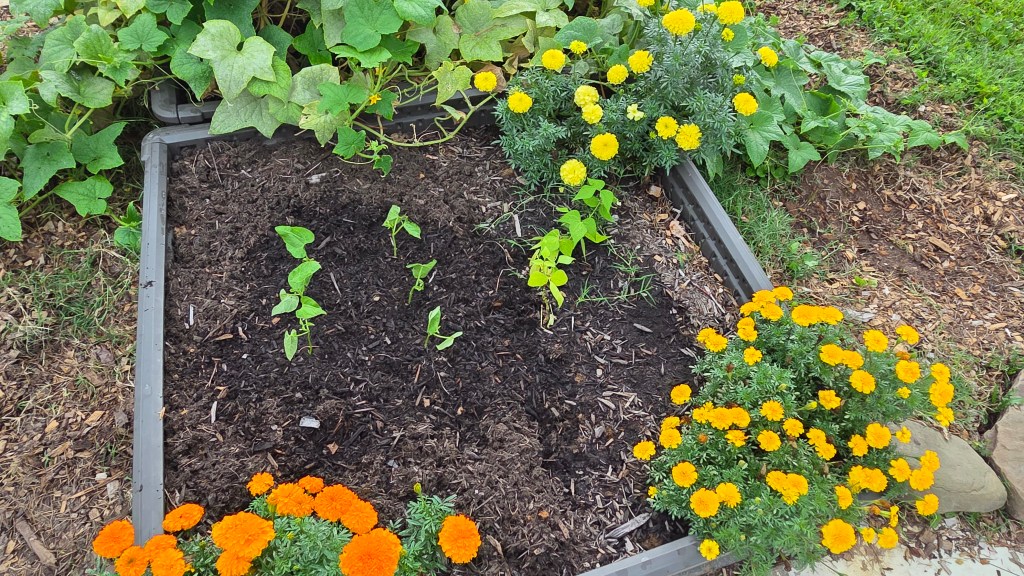
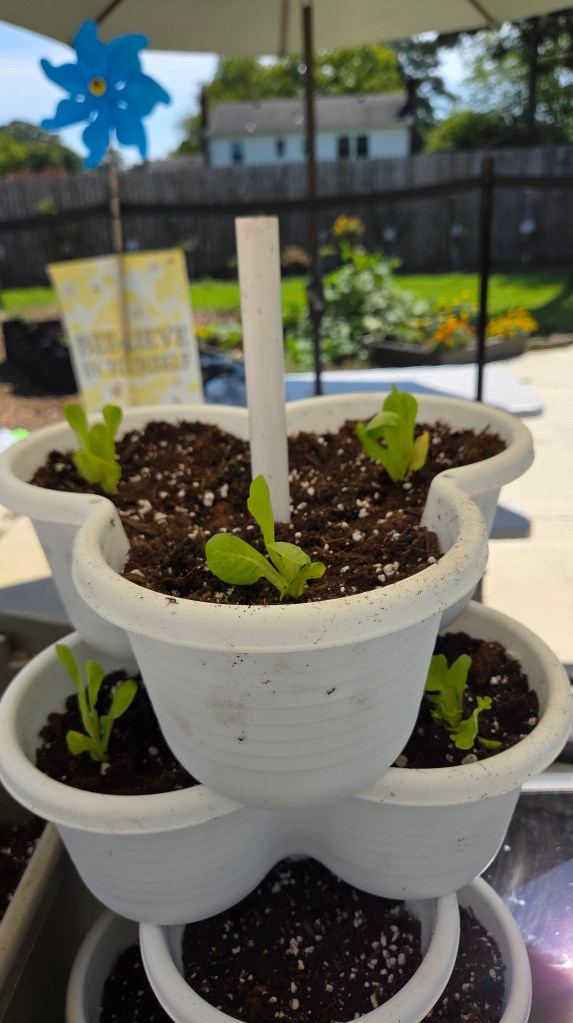
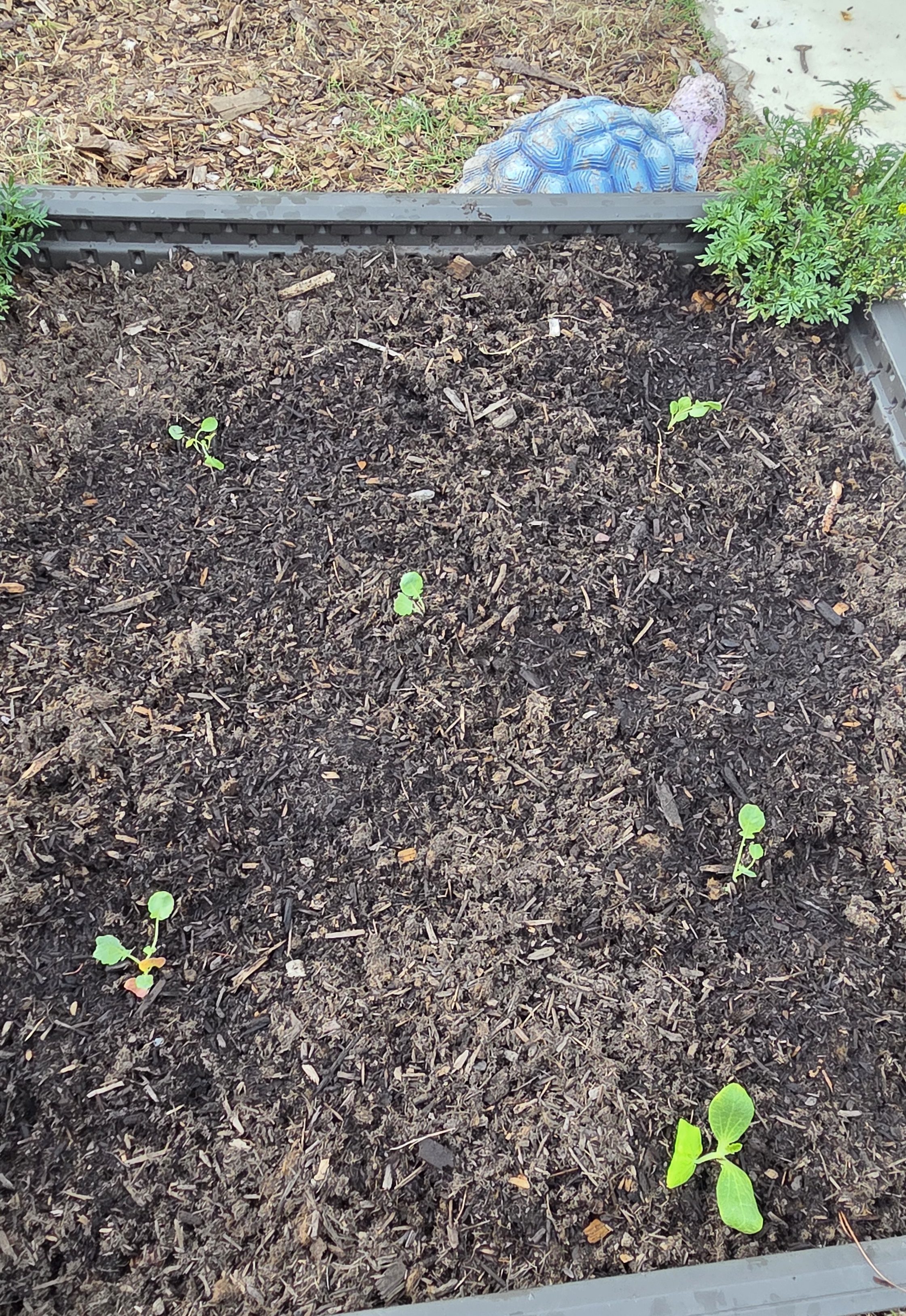
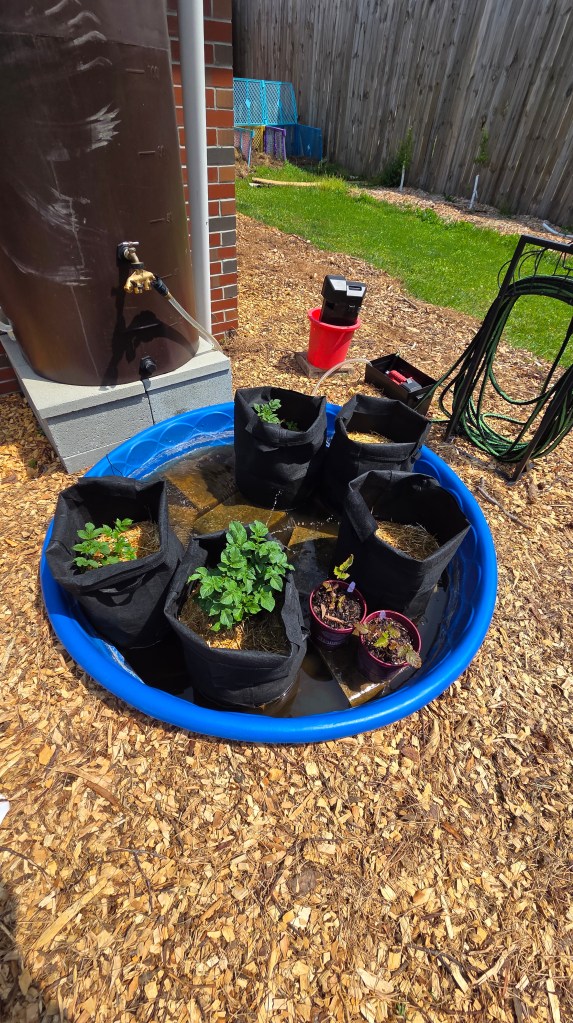
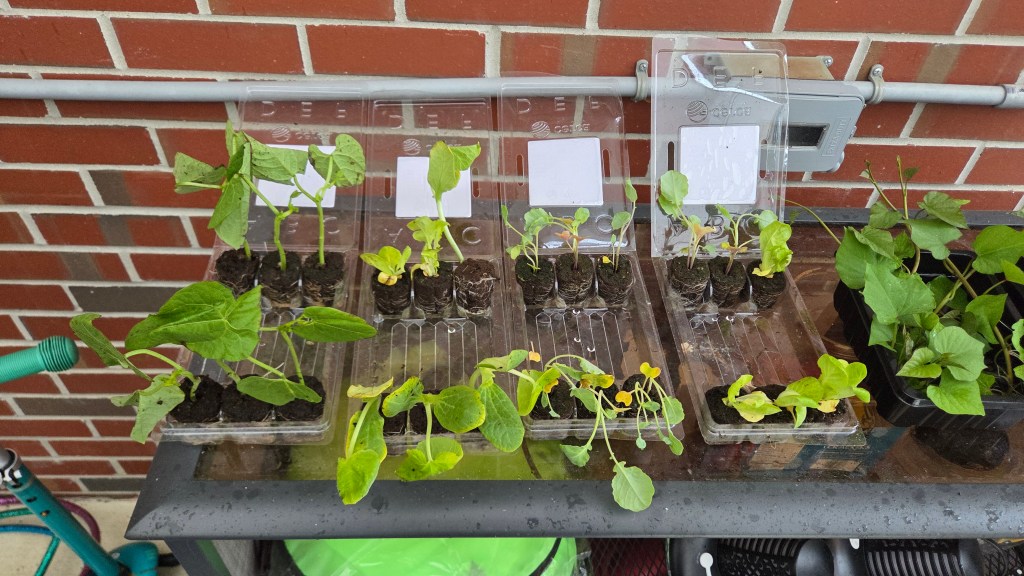
The Thanksgiving Garden is officially in full swing. This weekend, butter and romaine lettuce, rainbow carrots, bush beans, broccoli, butternut squash and spaghetti squash all got planted. Some of it should absolutely make it to the Thanksgiving table. Some of it may become an educational experience for me and a buffet for the rabbits. Gardening always keeps you humble and thankful.
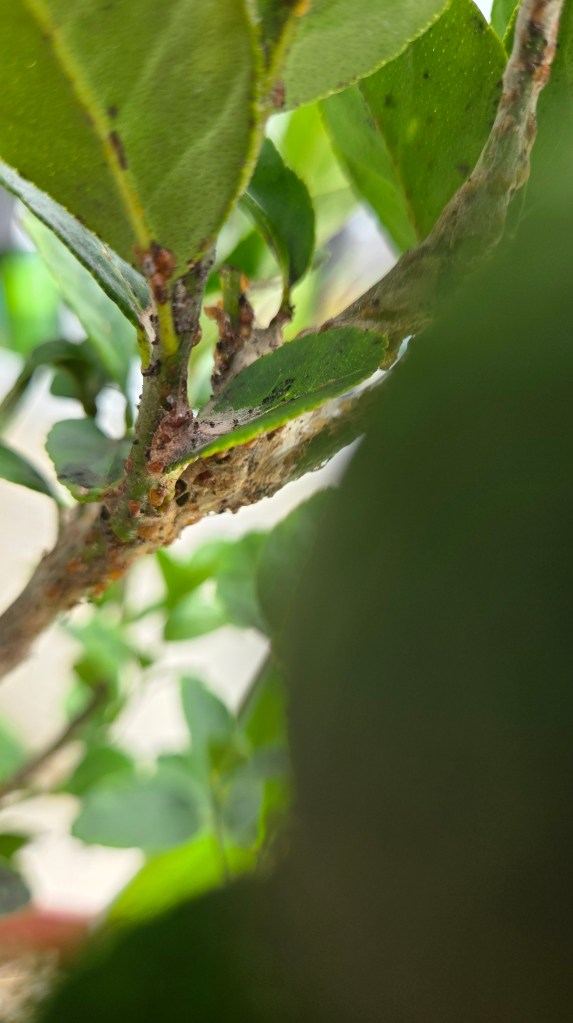
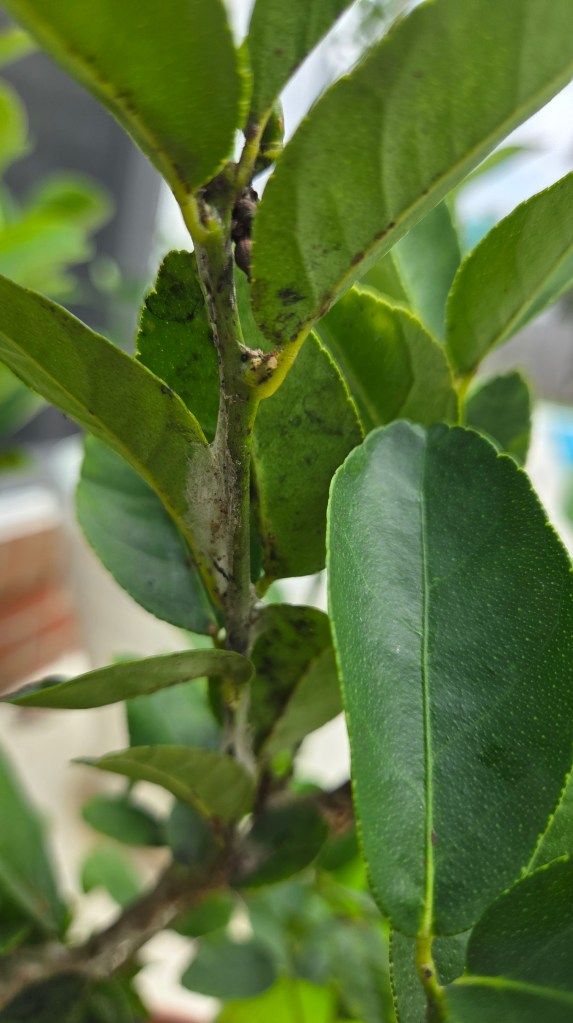
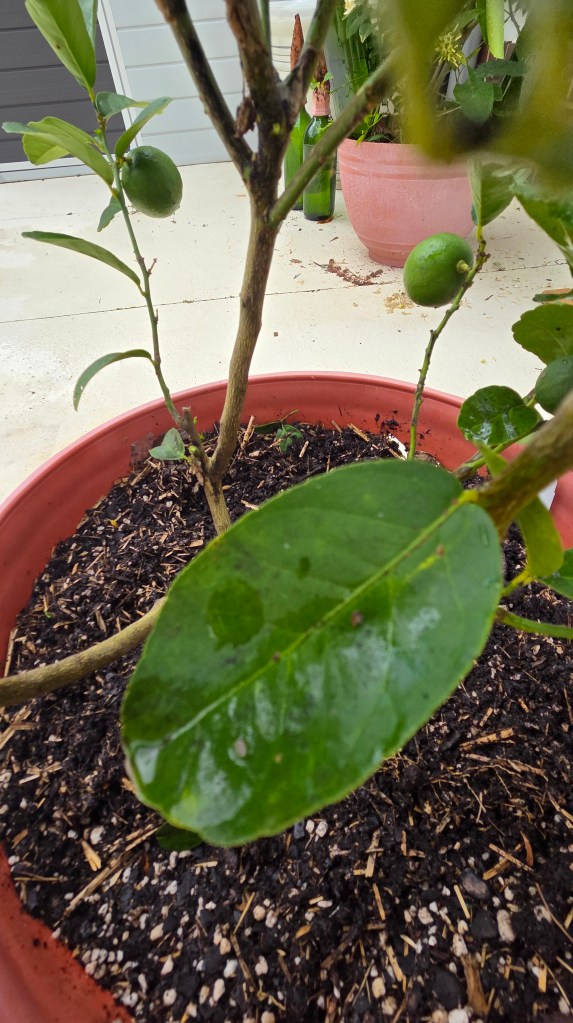
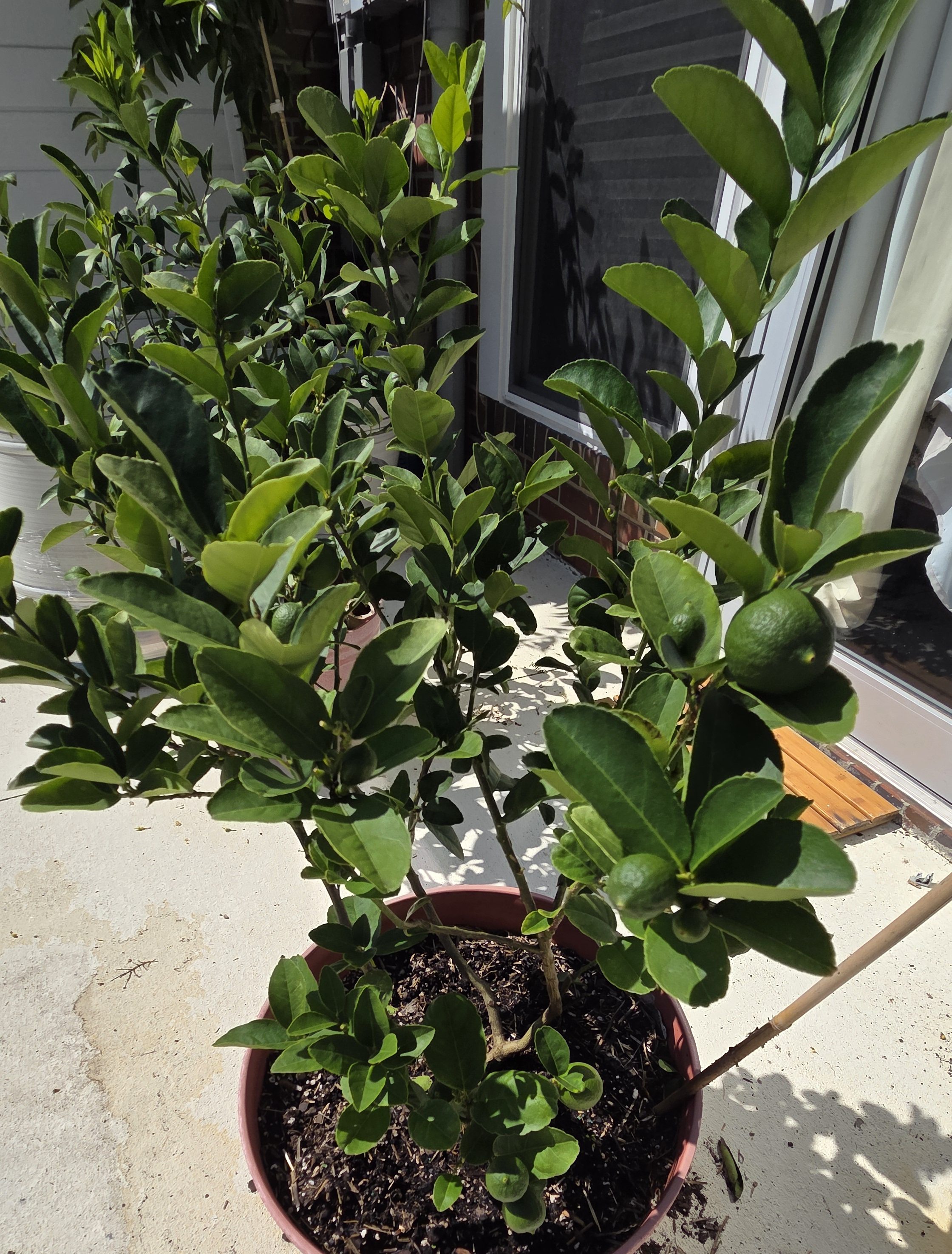
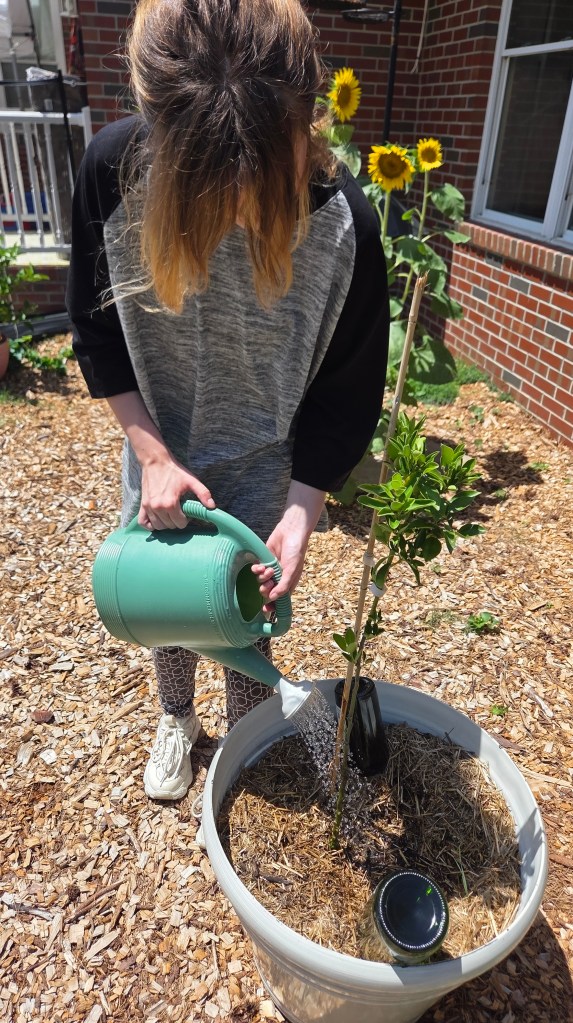
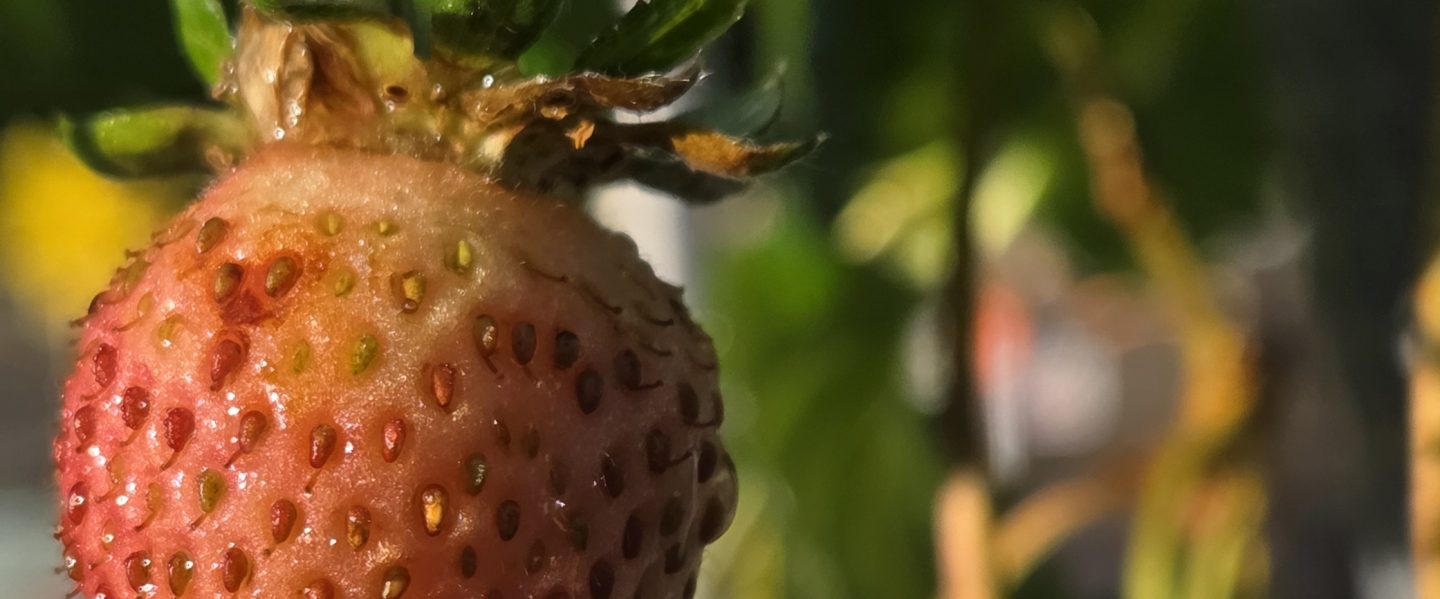
The citrus trees got some attention, too. Though, that wasnโ€™t exactly on the agenda. While checking on the citrus Friday morning, I discovered some of the leaves on the Key Lime bush had a black dusty powder all over them.

It was a little concerning for what is an otherwise thriving little bush. It has been crushing it all Summer.

So, I took a few photos and appealed to Master Gardener Google.

A few more photos later and a few questions answered and it turns out the little tree has a pretty good scale infestation.
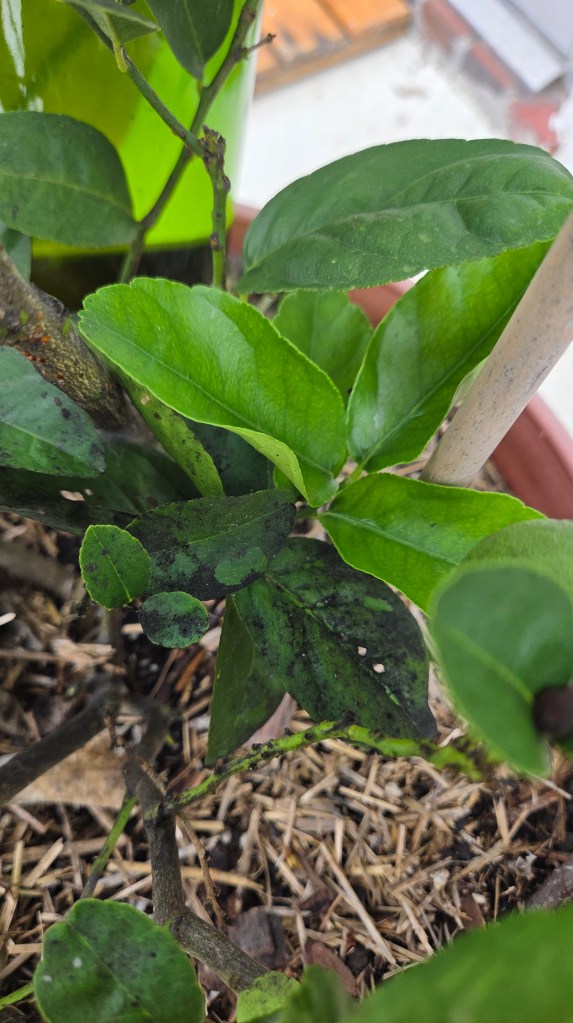
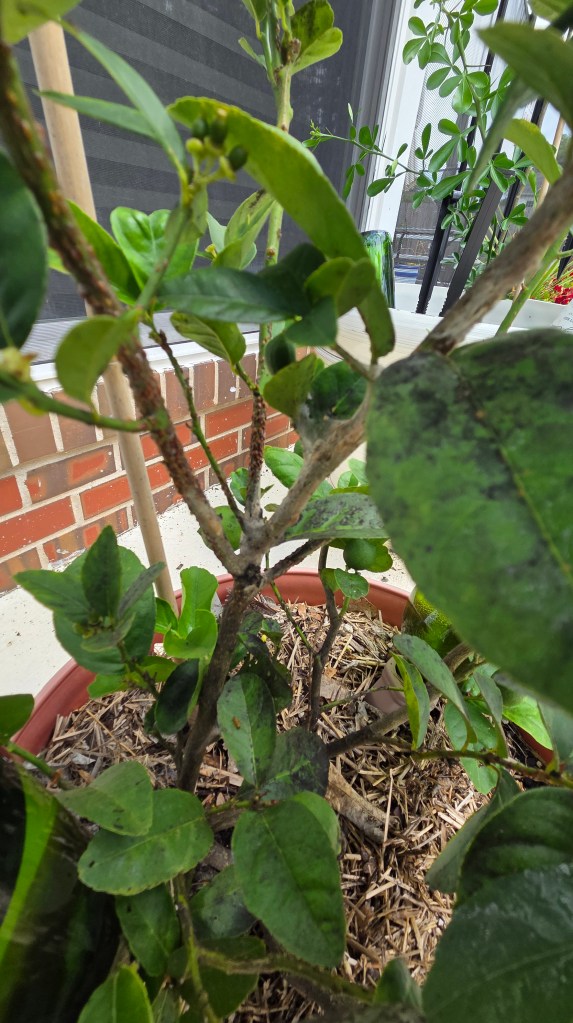
What is scale?

Great question.

Scale (noun): A sap-sucking insect pest that attaches to plant stems and leaves, often appearing as small brown or tan bumps. Scale can weaken plants and produce sticky honeydew that encourages black sooty mold.

Itโ€™s that last bit, the โ€œblack sooty moldโ€ I was seeing and the dead giveaway for the problem.

I will say, it was much less stressful to deal with a tree issue that wasnโ€™t my fault, and deal with it I did.

The tree is scrubbed and trimmed and all the other citrus inspected. Tomorrow will arrive some organic horticulture oil which will treat anything I didnโ€™t get brushed away and rinsed off.

Getting Ready for a Larger Pot.

Not a death sentence and glad it seemed to be caught pretty early.

I planted some wild flowers for Fall. I also gave all the bird feeders a serious deep cleaning and judging by the traffic at the Buttervale Bird Buffet, the customers have apparently decided the establishment may remain open. Even as I type this I am watching them come and go.

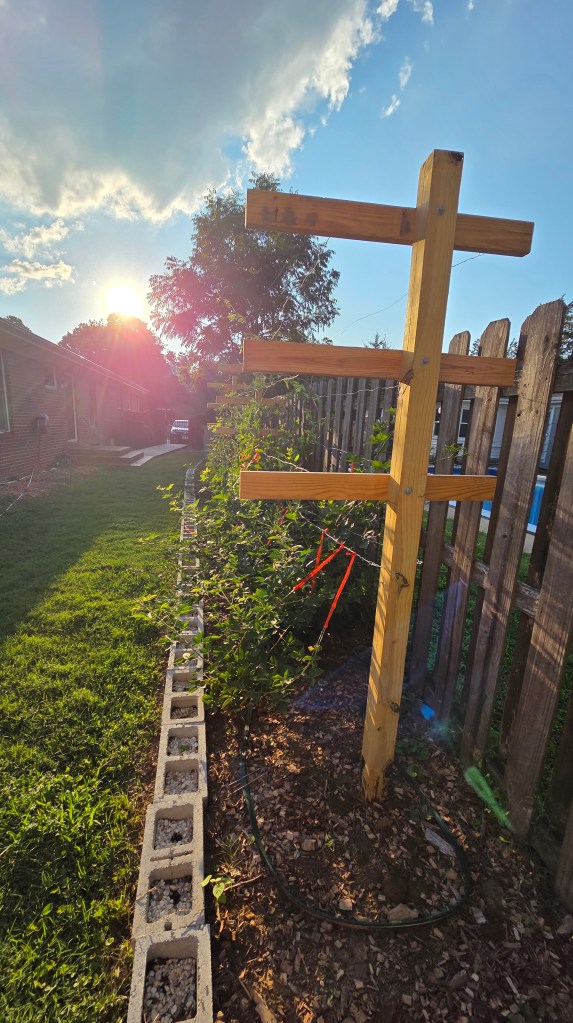
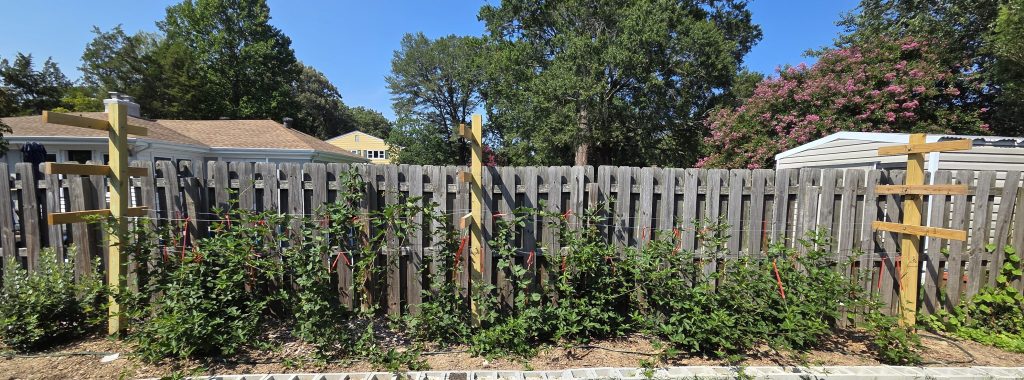
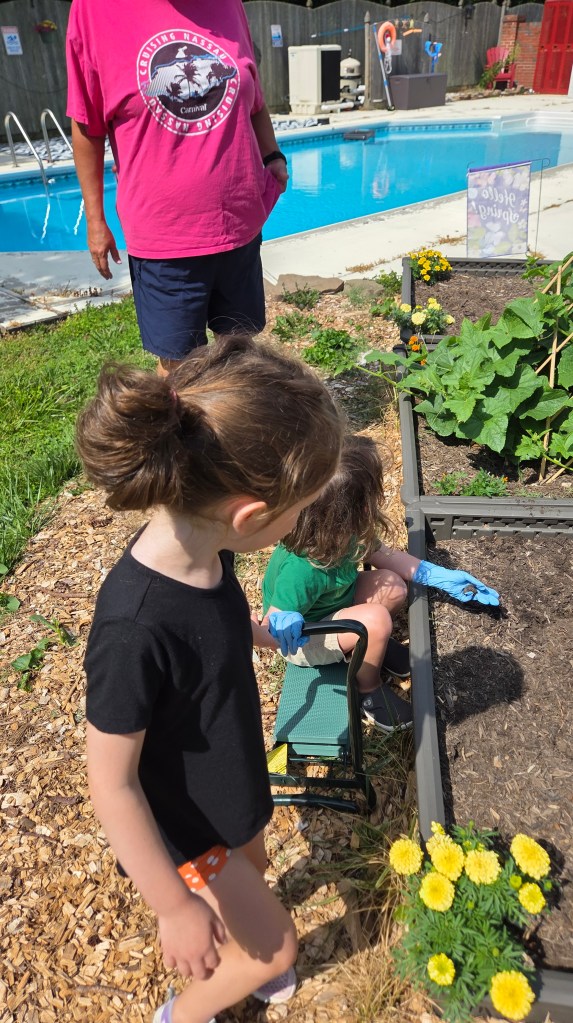
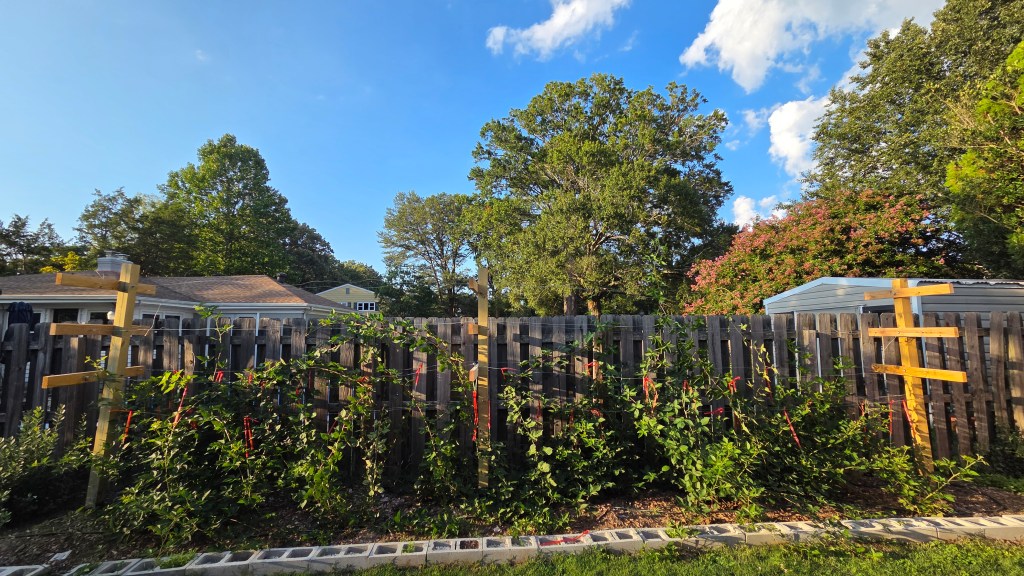
The blackberries continue getting trained onto their new trellis little by little. I should say, it is tough to play favorites, but Blackberry Row is in the running. I have done something right there in way of location or fertilizer or maybe I just got lucky, but I can see years of blackberries to come and nice addition of privacy since they are right next to the neighborโ€™s pool. It thrills me to look at them every morning.
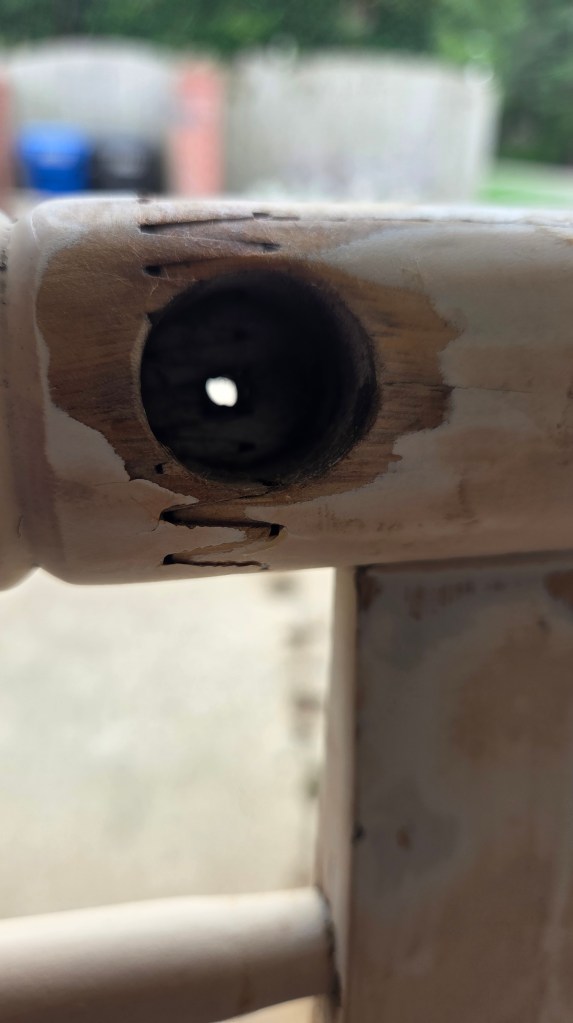
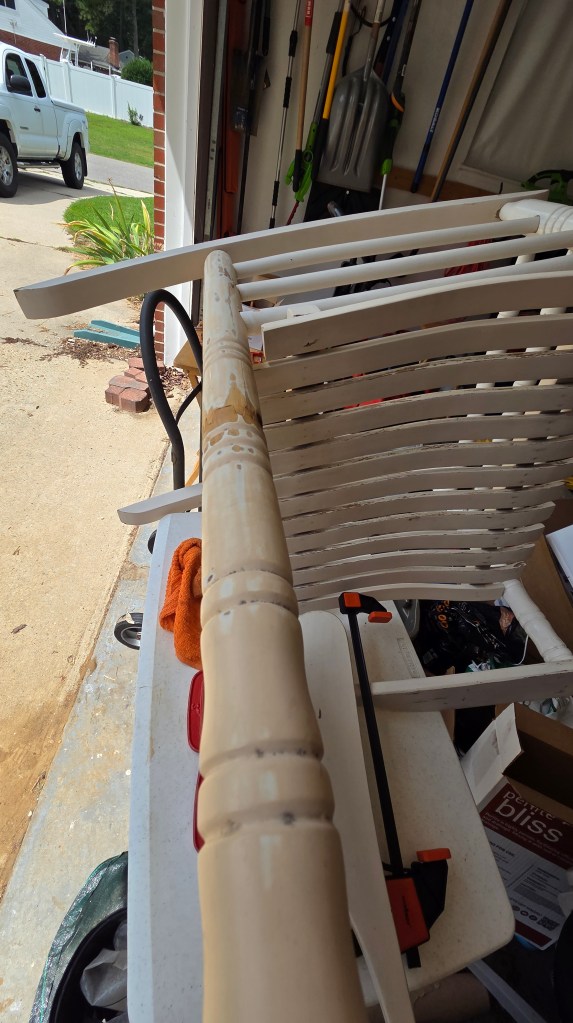
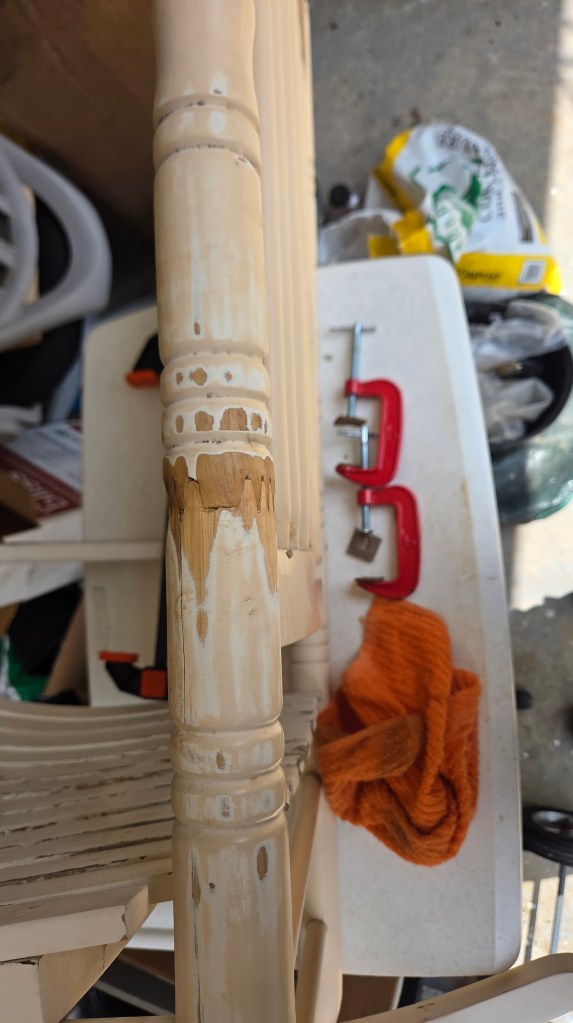
And because gardening wasn’t enough, the Winni Experience rocking chair restoration moved forward with a major glue-up. The worst of the damaged joints is now back together, clamped tight and curing. There is something very satisfying about taking an old piece of furniture that has clearly lived a life and figuring out how to give it a little more. This is way out of my comfort zone. I have never been that โ€œwood workerโ€ guy, but I feel like I am on a path to owning a router and a table saw and eventually 9 fingers. Glue and clamps and a few dowels for now.
Then there are the worms.

Yep. I’m a worm rancher now. But you knew that already.

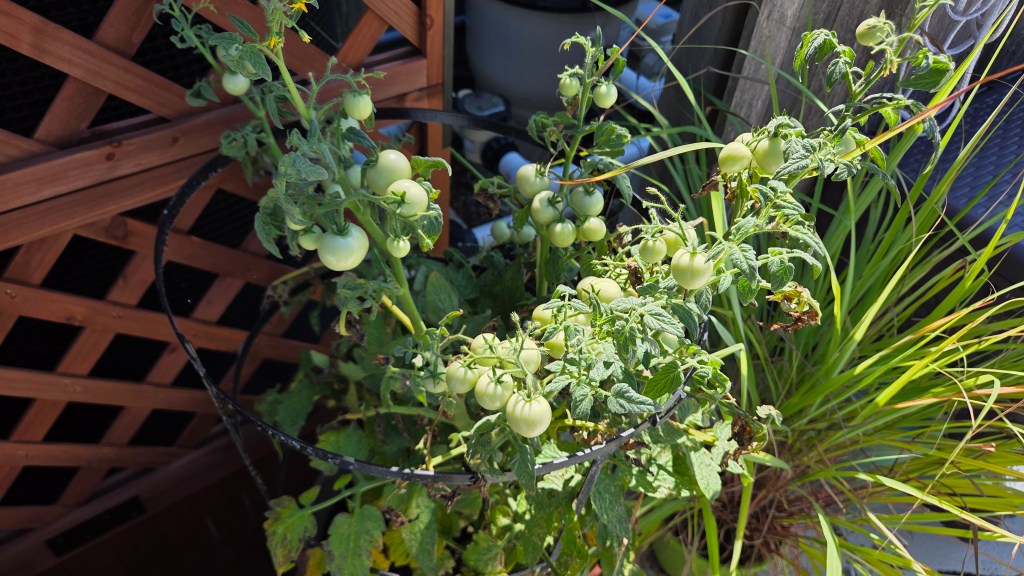
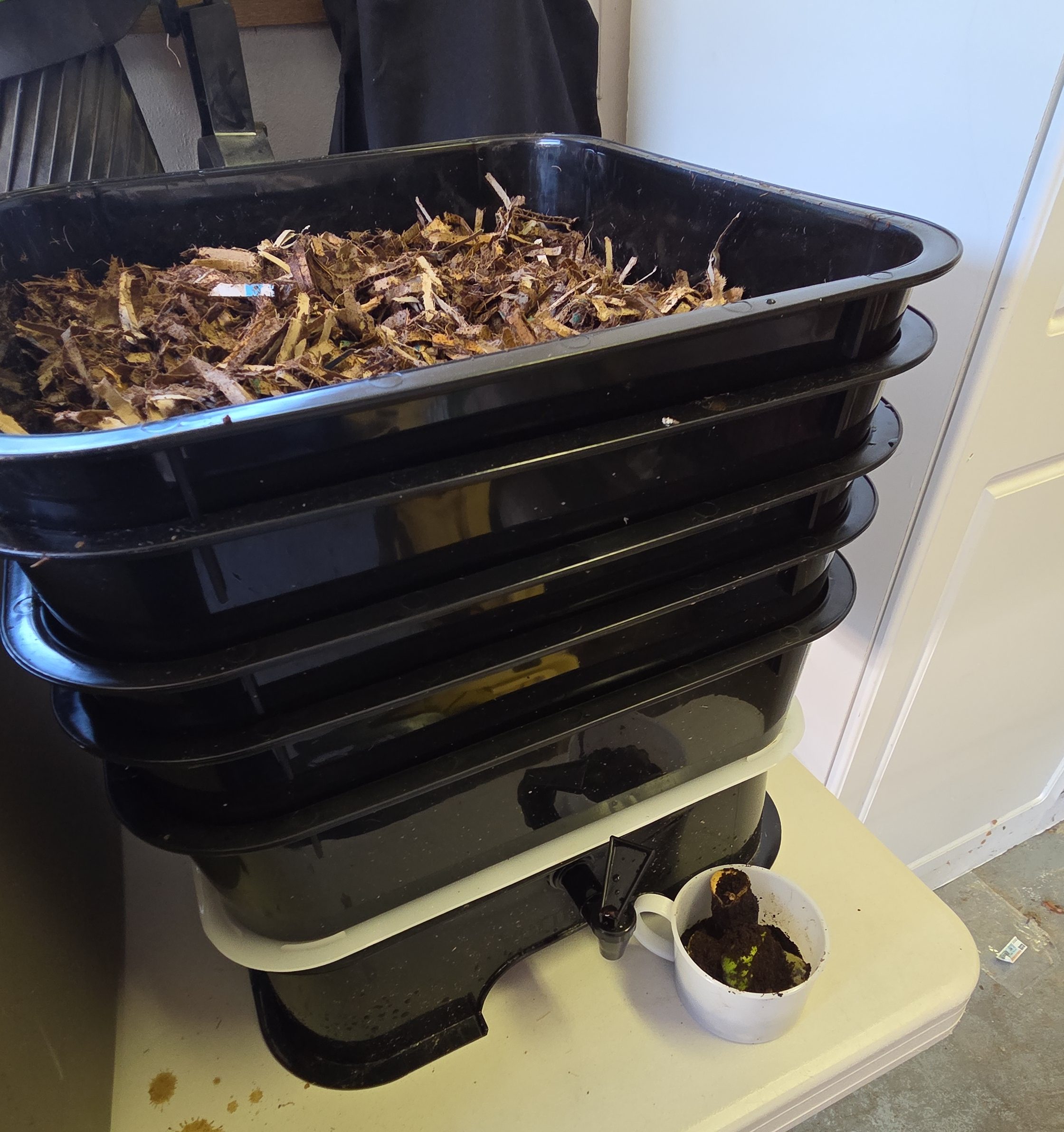
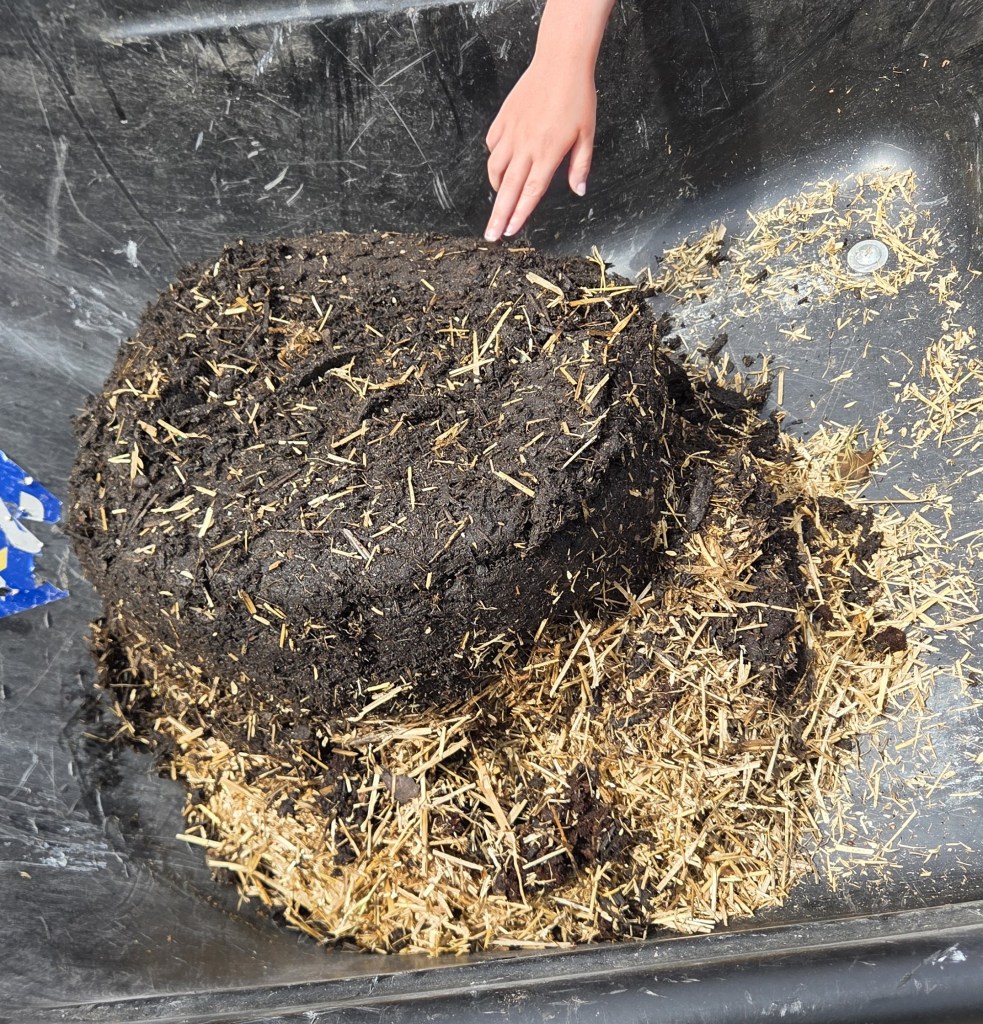
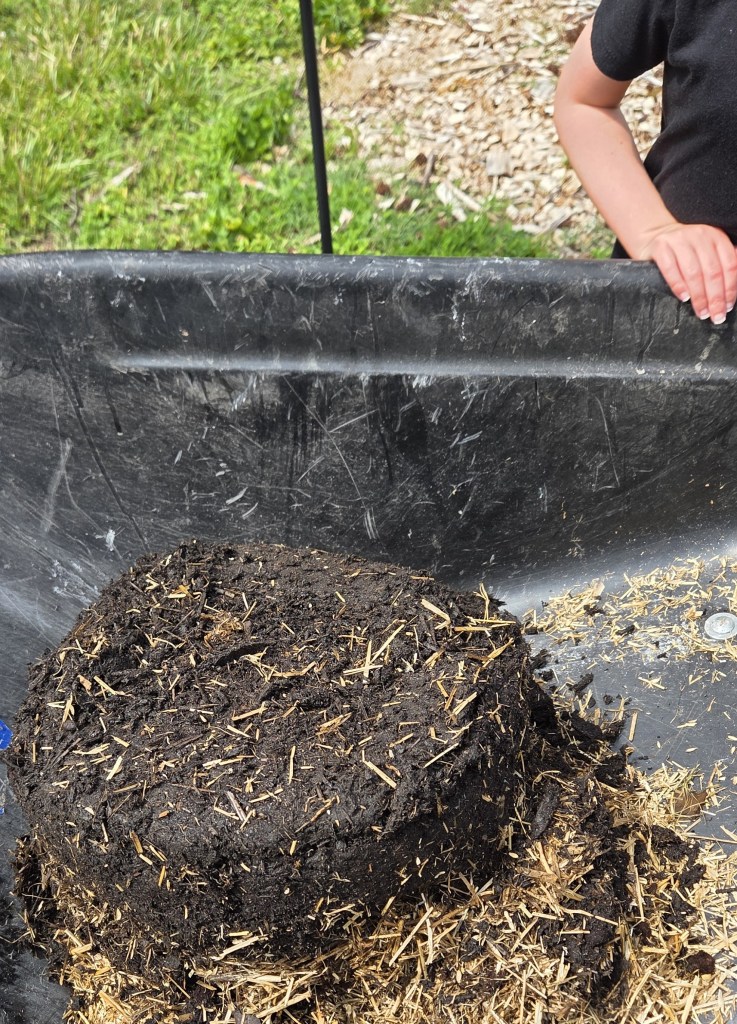
The new vermicomposting farm is up and running, stocked with red wigglers who have been given the important Buttervale task of turning kitchen scraps and shredded cardboard into some of the best stuff you can possibly add to a garden. If all goes according to plan, yesterday’s coffee grounds eventually become tomorrow’s tomatoes. That’s a pretty good system.

Worm poop. Whatโ€™s not to like?

By late afternoon Sunday, I finally decided I’d done enough.

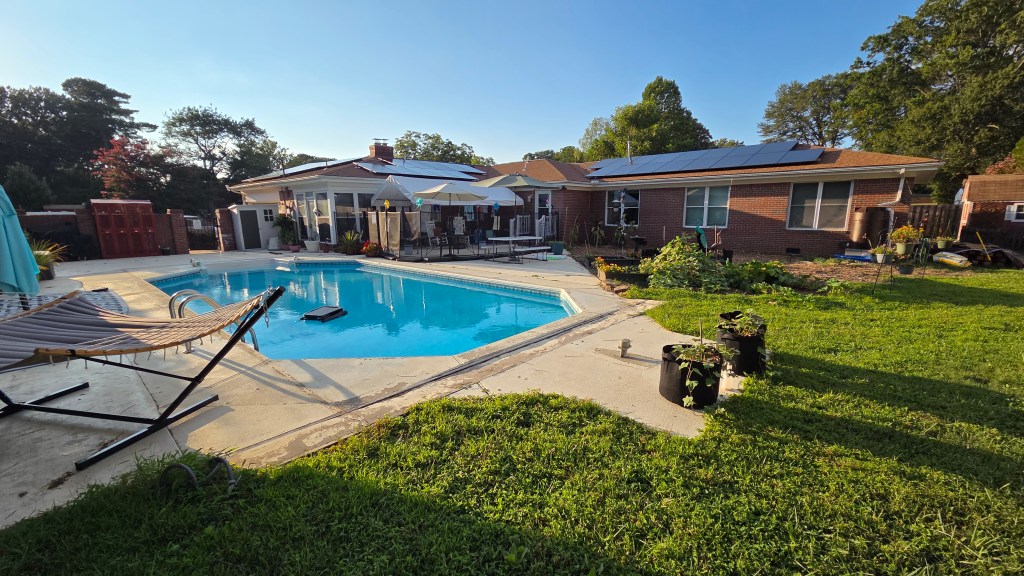
I climbed into the pool, put on my floaty belt and did absolutely nothing for a while. Just floated quietly, avoided the pool cleaning robots and watched the birds zip back and forth overhead on their way to the freshly cleaned feeders. Wrote a chunk of this blog post in my head as I tried to get some Sunlight on my belly. Susan remarked, that based on my tan I really am a farmer now. Sheโ€™s not wrong.

Here in Virginia Beach, today is the last day of summer vacation for the public-school kids. Tomorrow it’s back to alarm clocks, backpacks, buses, homework and the grind.

I hope their summer was everything they wanted it to be.

Although I’m pretty sure most of the kids (and quite a few Teachers) are thinking the same thing tonight:

It went by way too fast.

Tomorrow, my dear first grandbaby starts Kindergarten. She has been doing pre-school classes for a couple of years, but this is the Big League. Full day Kindergarten in a room with 26 other kids. Yikes. I canโ€™t type it without tearing up. Where does the time go? So quickly we watch helplessly as they take another huge step on their own.

My prayers are for her and for everyone starting a new adventure tomorrow.  
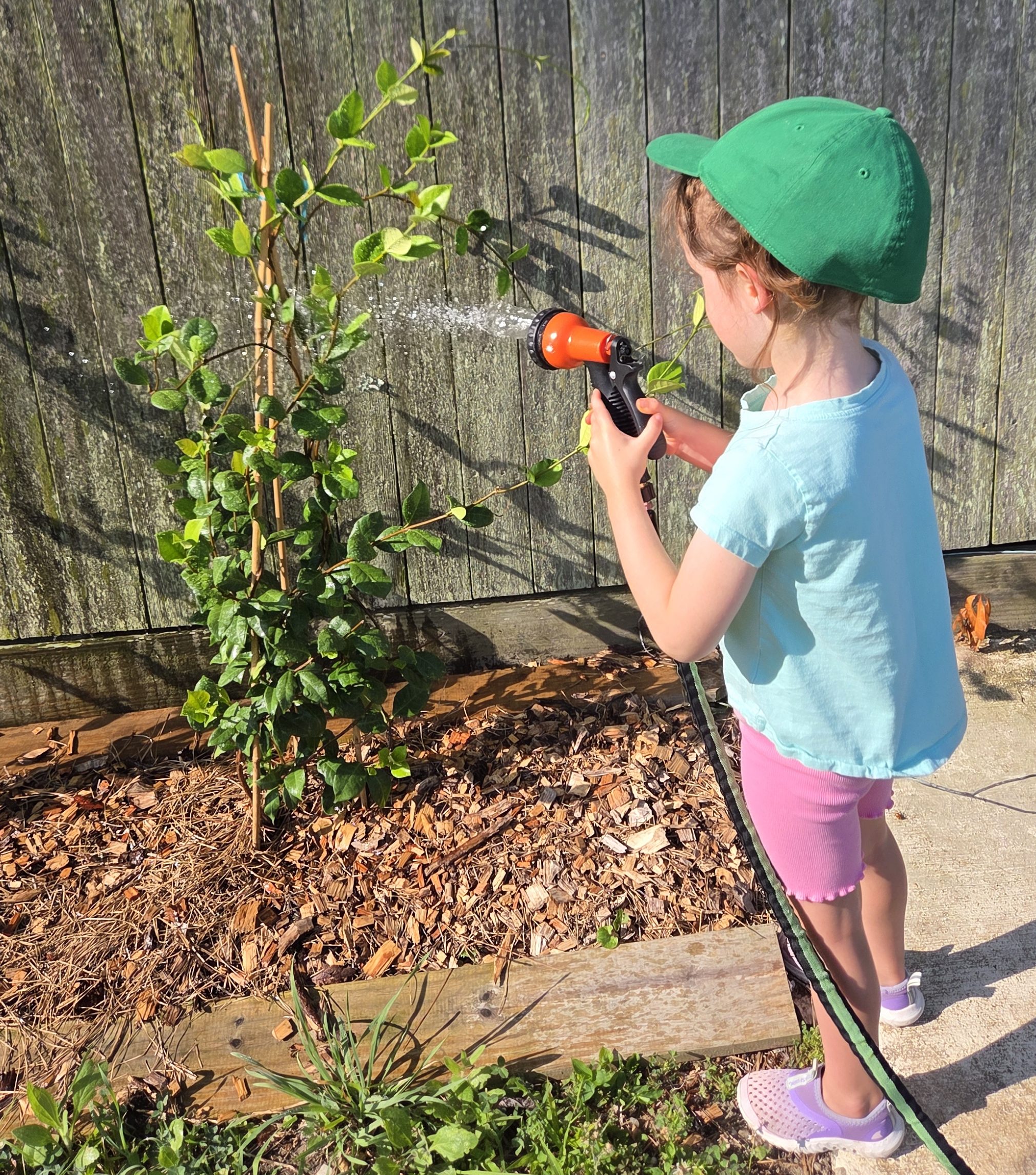
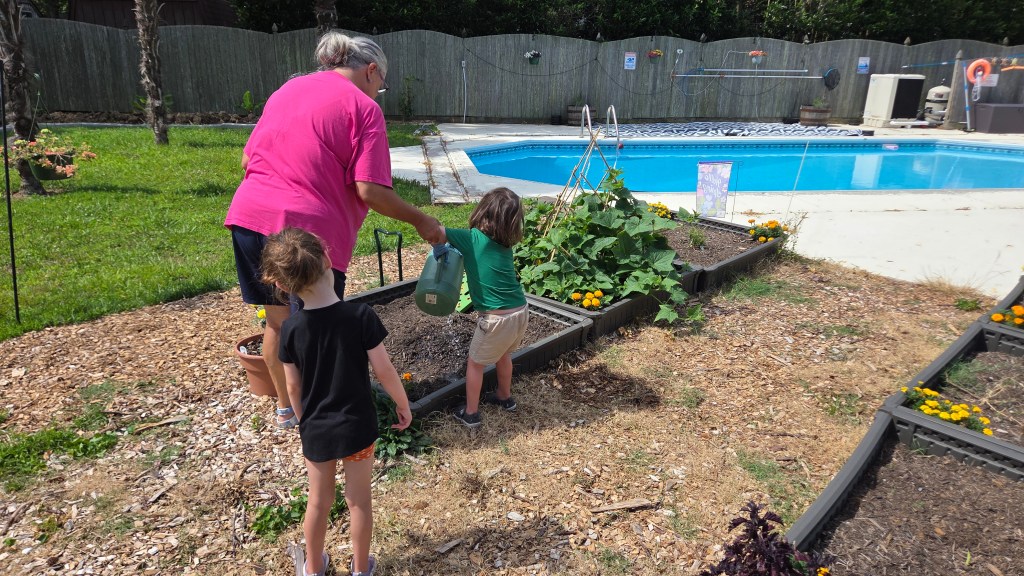
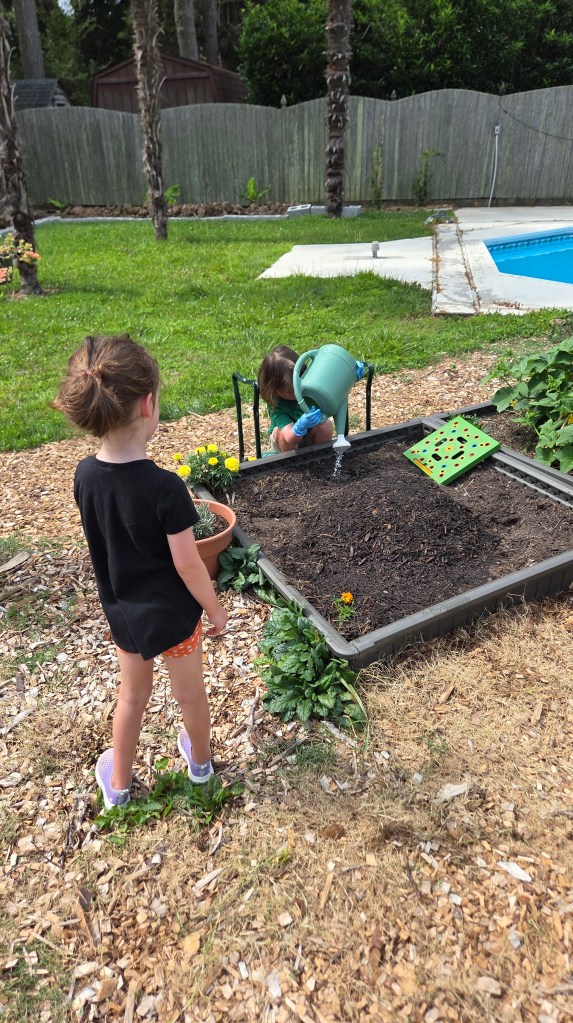
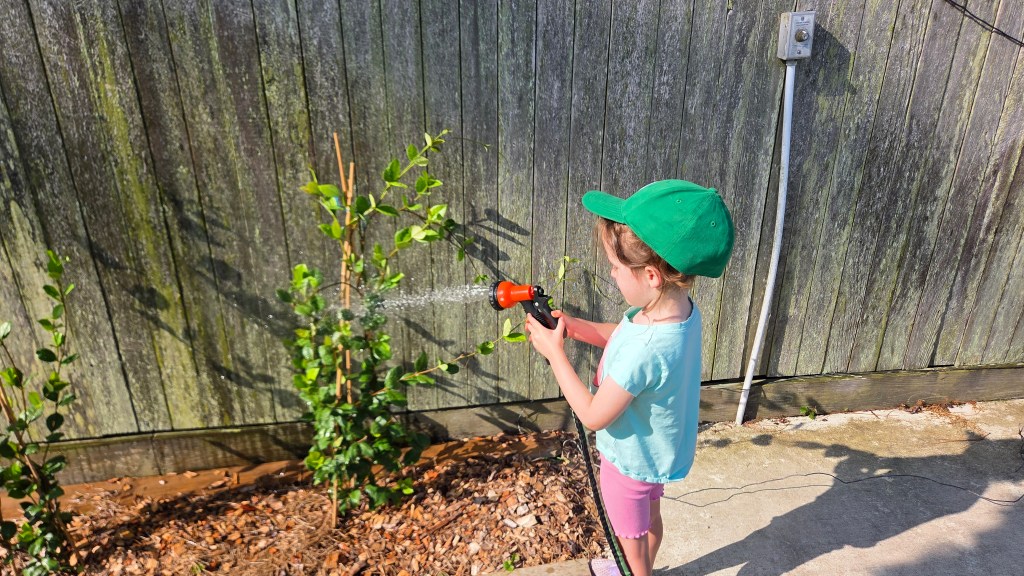
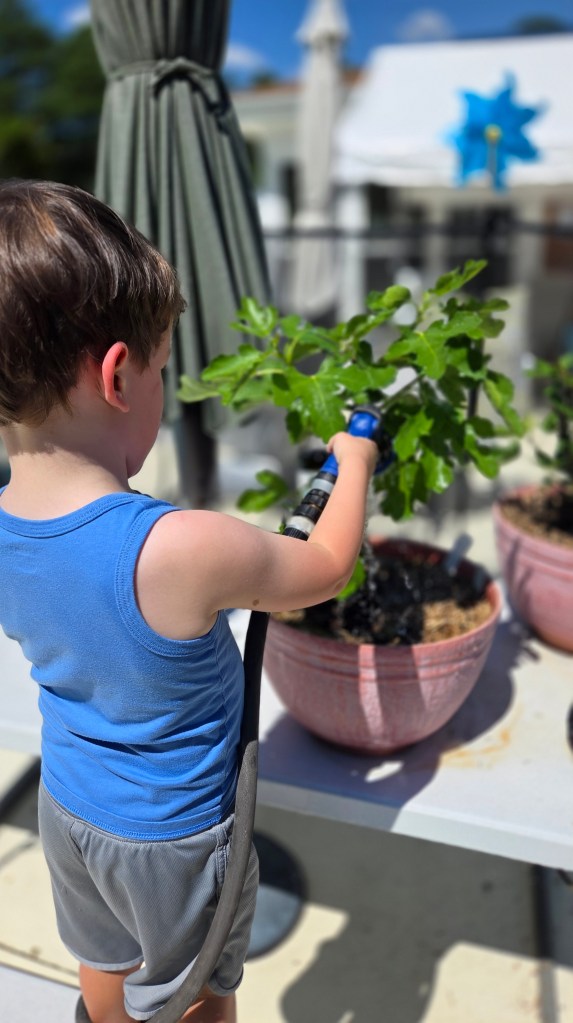
She Gets an “A” in Plant Watering

Around Buttervale, though, for the retired among us, the seasons just sort of roll into one another. Summer tomatoes give way to Thanksgiving broccoli. Flowers change. Birds come and go. Leaves will start falling. The worms keep pooping.

And tomorrow morning, we start counting down again.

Day 1 of School and 95 days until Thanksgiving.

There’s still plenty of growing left to do.

Tomorrow the Adventure continues.

Growing Gratitude: 105 Days to a Thanksgiving Garden

How Much Can We Produce for Our Thanksgiving Table?

There are 105 days until Thanksgiving.

And I’ve decided to ask a question:

How much of our Thanksgiving dinner can be produced right here at Buttervale?

A garden area with trellises supporting climbing plants in front of a wooden fence, featuring green foliage and a blue sky in the background.

Not because I think the grocery stores are going to fail. Not because I’m planning to become completely self-sufficient.

Certainly not because growing a carrot in the backyard is necessarily cheaper than buying a bag of them at the supermarket.

I am a little scared to do the math on that, to be honest. I don’t need to know I am eating a $70 carrot.

Healthier. Tastier. Better for the environment. Far more rewarding. Yes to all.

Definitely not cheaper.

In the end, I’m doing this because I think knowing where our food comes from matters.

I think food security matters.

I think teaching our children and grandchildren where food comes from matters.

And I think these thngs matter more every single day.

The Thanksgiving Garden

The idea started rather simply.

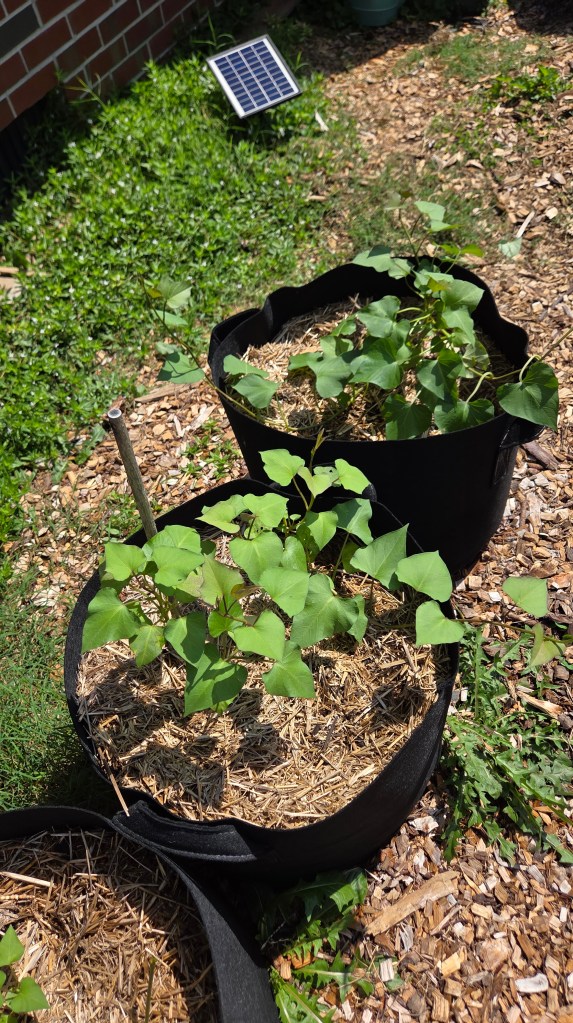
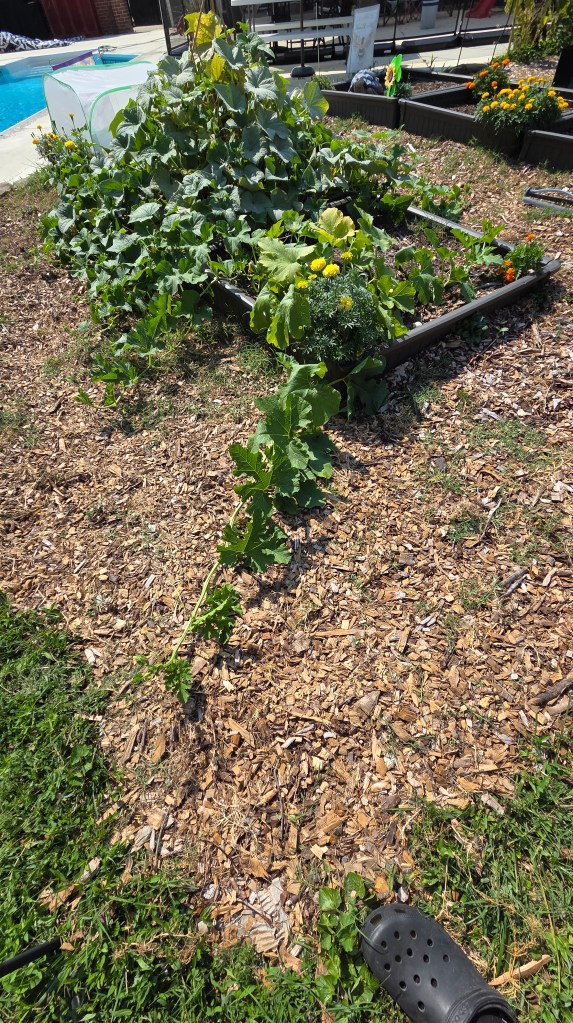
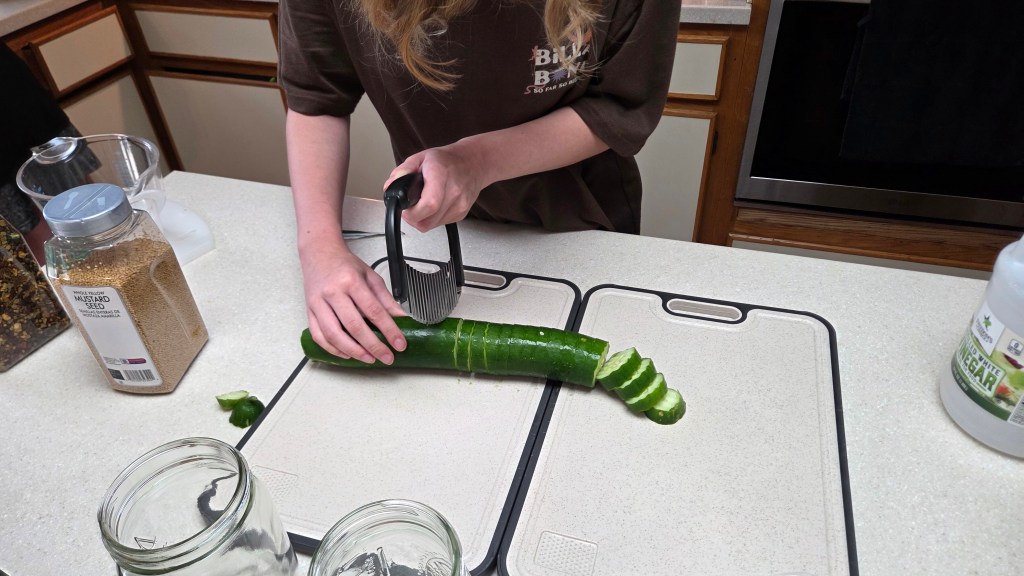
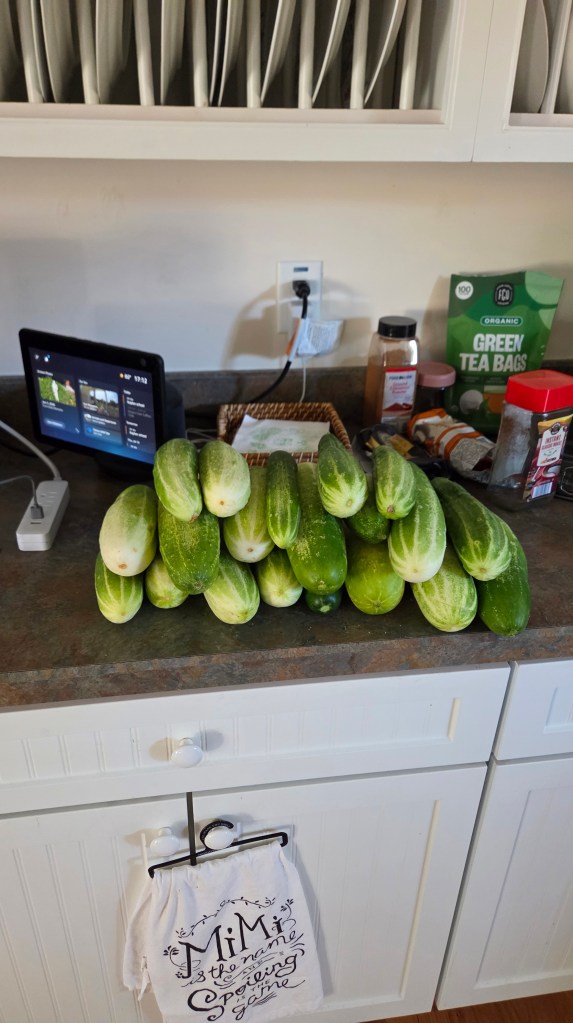
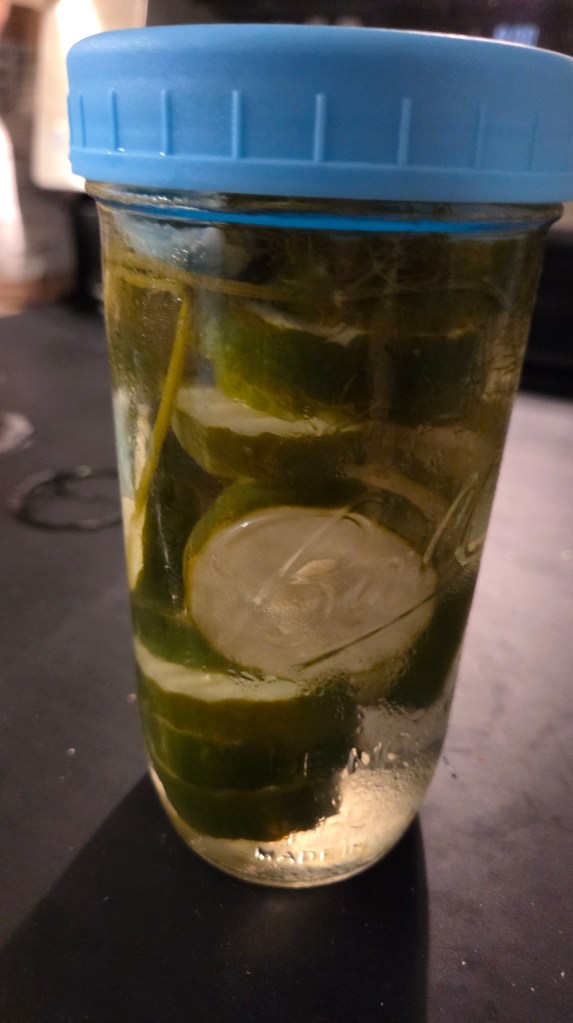
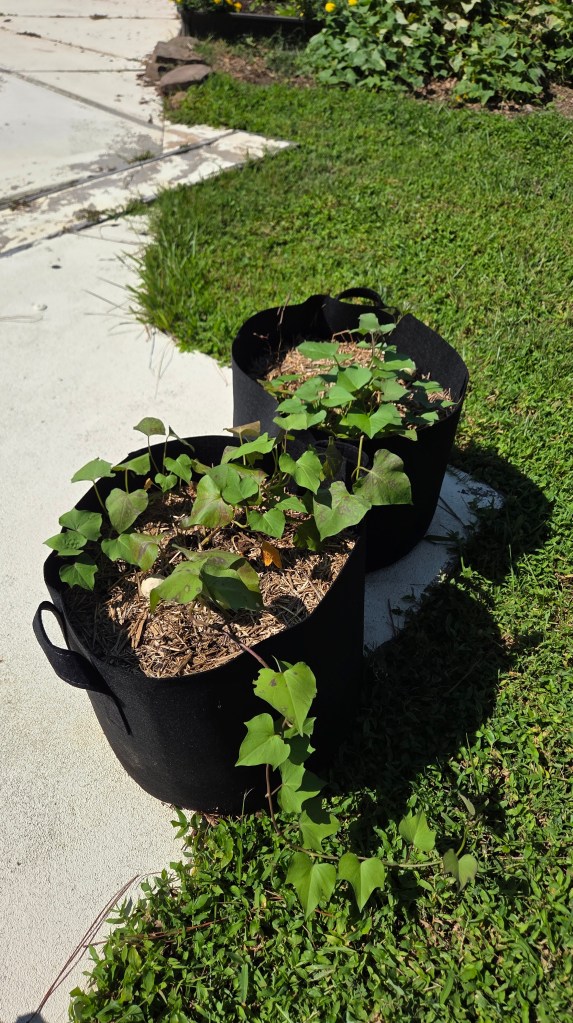
I already had sweet potatoes growing. There were bush beans in the garden. Pumpkins were spreading across the yard. Cucumbers had already become quarts of homemade dill pickles.

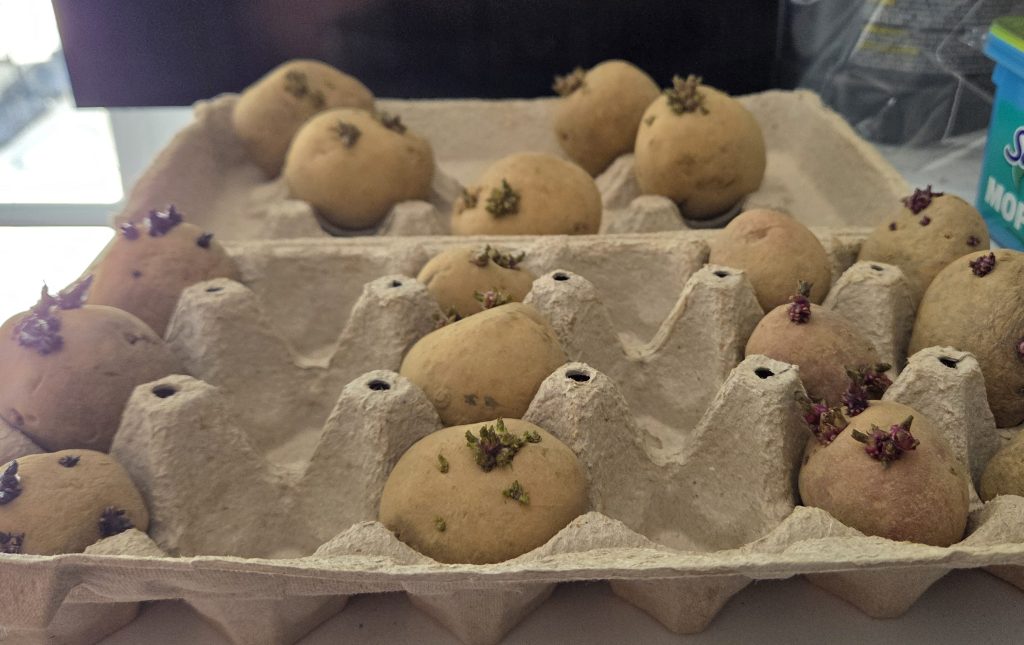
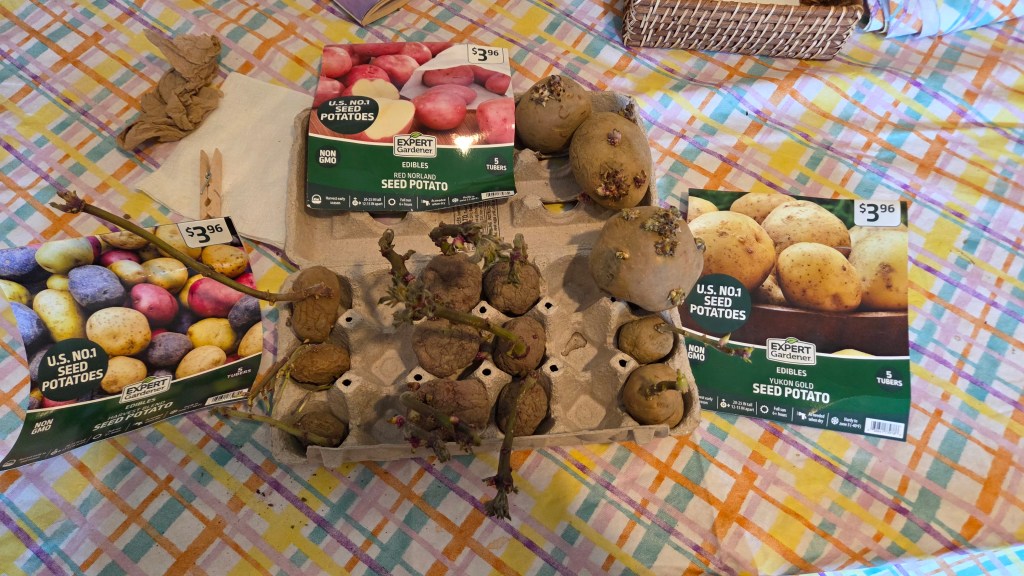
Then I ordered some fantastic, organic potatoes from Maine, specifically with Thanksgiving in mind.

A tray of small potatoes with visible sprouts, placed in an egg carton.

That got me thinking.

Why stop there?

I have seeds for carrots, kale, Swiss chard, spinach, lettuce, radishes and cabbage. We’re adding broccoli. There are empty raised beds waiting to be planted and plenty of grow bags.

Suddenly this wasn’t just the Fall vegetable garden.

It’s the Buttervale Thanksgiving Garden.

The goal isn’t necessarily to produce everything we eat on Thanksgiving.

The goal is to see how much we can produce.

That’s the experiment.

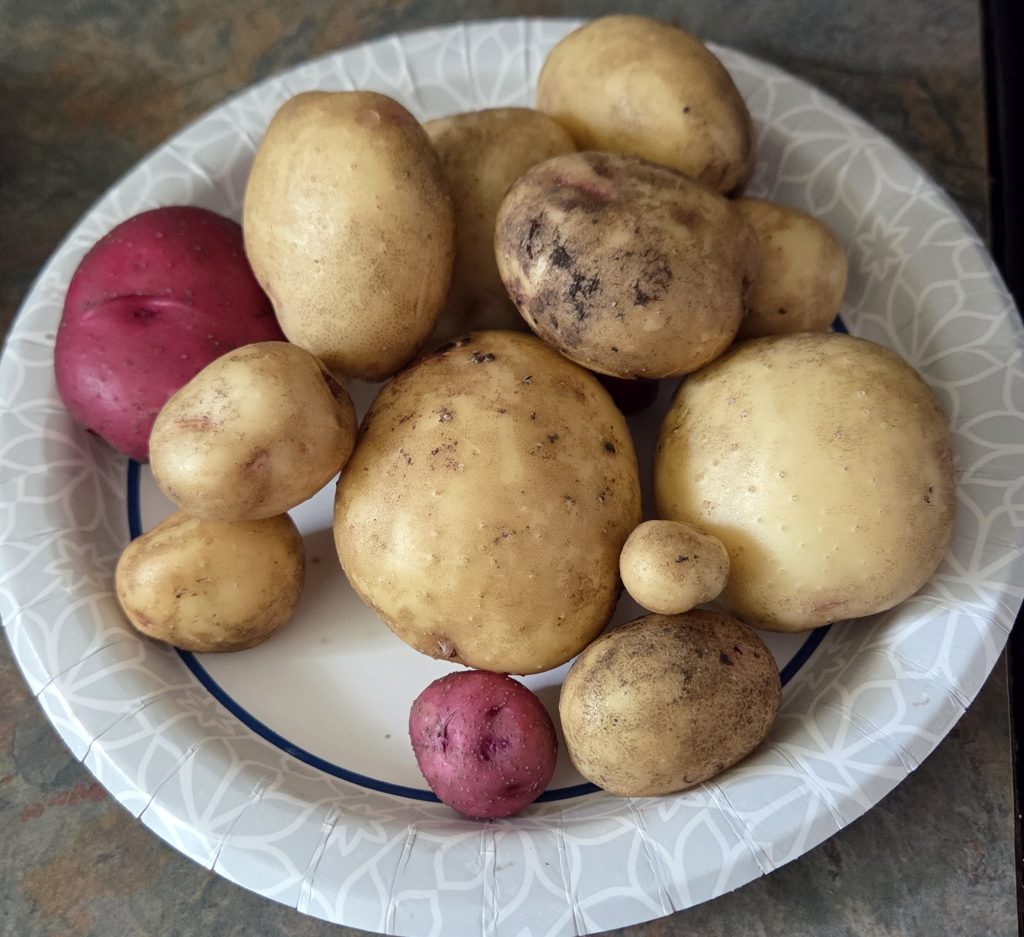
Can the mashed potatoes come from the backyard?

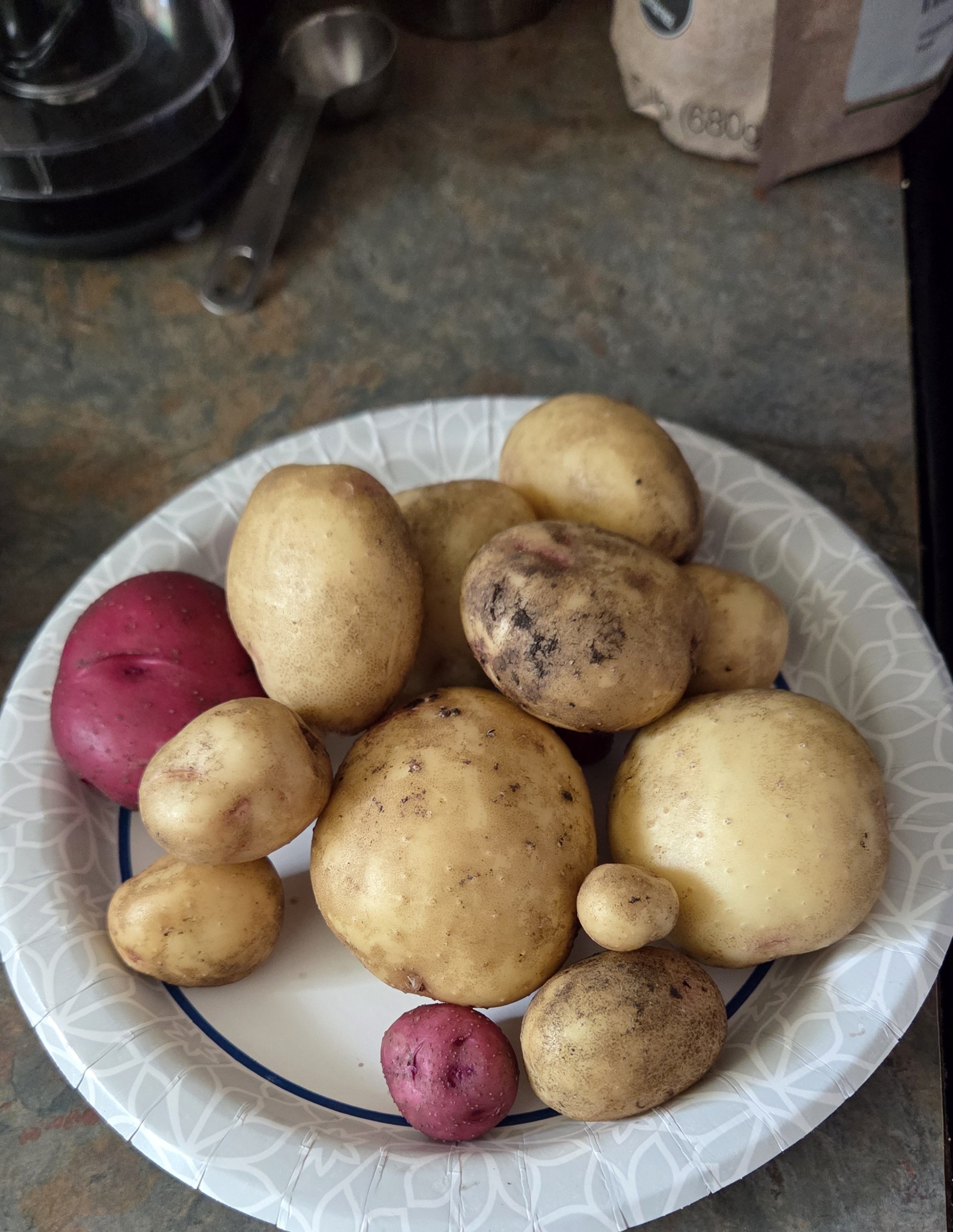
A variety of potatoes, including yellow and red ones, arranged on a paper plate.

What about the sweet potato casserole?

The green beans?

Carrots?

Greens?

Could the pumpkin in the pie have grown 30 feet from the kitchen where the pie is baked?

And then there are the things that don’t have to come from a garden at all.

What if the bread or rolls are baked from scratch?

What if the pie crust isn’t pulled from a freezer?

What if the herbs come from just outside the kitchen door?

I have parsley, sage, rosemary and thyme growing.

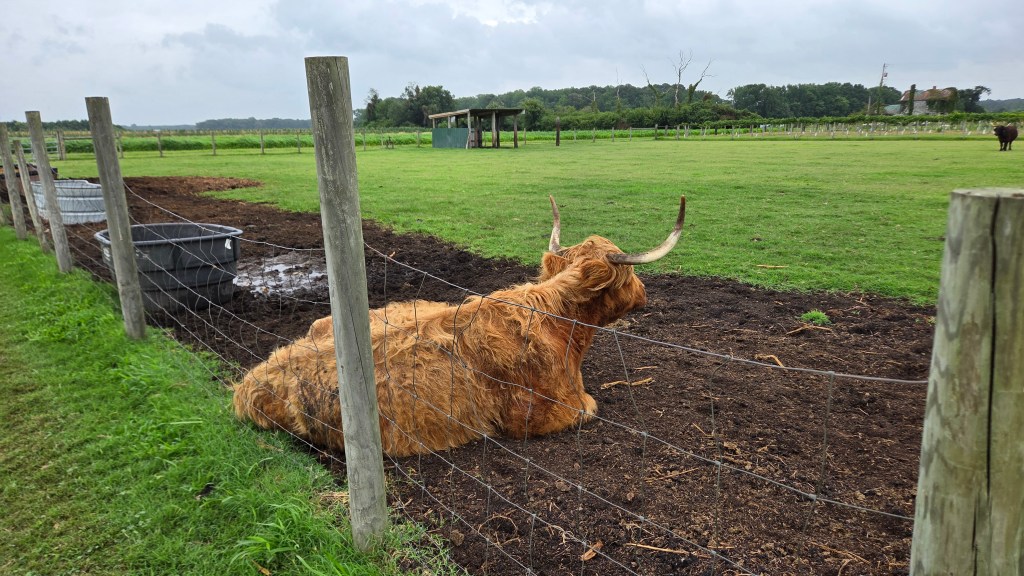
Taking the idea another step or two, it is easy to watch people with a little more property raise chickens and put their own eggs into those pies and breads. Some families raise turkeys, pigs, cattle, goats or sheep. Others preserve summer tomatoes, make their own jam, can green beans, freeze corn, make pickles, dry herbs or put away fruit from their trees.

Generically, I guess we call those people farmers and it seems to me that they are a dying breed.

A Highland cow resting beside a fence in a grassy field, with feeding troughs and a barn in the background under a cloudy sky.

Very few of us are going to produce everything we eat. (I am never going to grow coffee or chocolate, so there’s that.)

However, far too few of us produce even one thing we can eat.

How much could we produce?

This year? Next year? in ten years?

Can it be a standing challenge to see if, every year, we can produce a little more for our Holiday?

Perhaps the more interesting question is:

Does it matter?

I Like to Think It Does

Most of us have become remarkably disconnected from our food.

Potatoes come in bags from the grocery store.

Green beans come in cans and get mixed with soup from a can and sprinkled on top with fried onions from a can.

Corn from the freezer.

Bread comes from a truck wrapped in plastic.

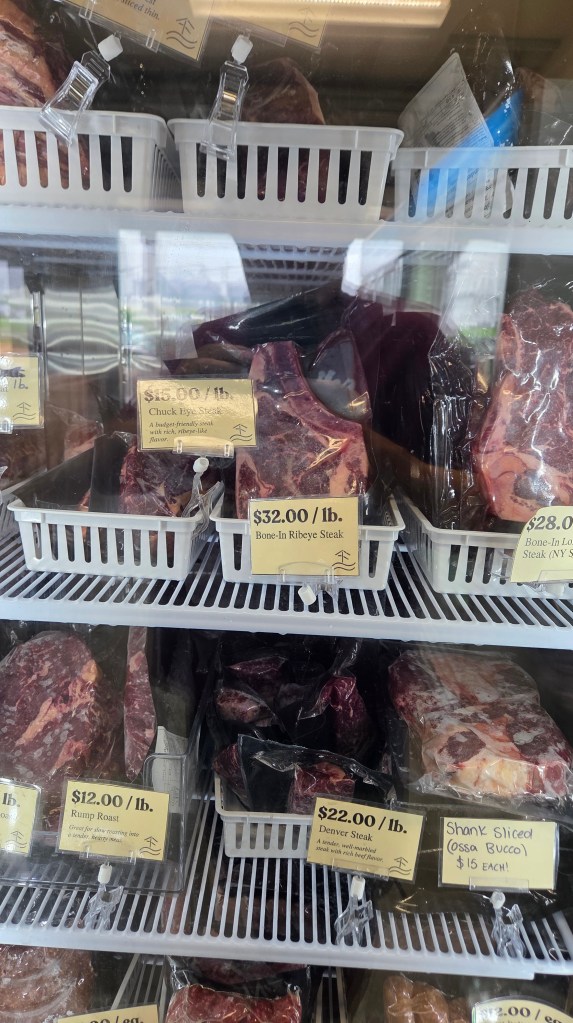
Meat comes neatly vacuum packed or packaged on a foam tray. From where? South America or down the road?

Display case with various cuts of beef, including Bone-In Ribeye Steak priced at $32.00/lb, Chuck Eye Steak at $16.00/lb, Rump Roast at $12.00/lb, Denver Steak at $22.00/lb, and Shank Sliced (Ossa Bucco) at $15 each. Labels provide pricing and descriptions for each cut.
An example for locally sourced meat from Cullipher Farms in Virginia Beach.

It’s all so incredibly and amazingly convenient, and I’m certainly not giving up grocery stores. The fact remains, though, that our logistics are so finely tuned and โ€œjust in timeโ€ that if any cog in that machine fails, our grocery store shelves can be empty in just a few days. Picture the bread aisle in Virginia Beach the day before the blizzard arrives. It is a little scary.

Beyond that, something gets lost when food becomes nothing more than another thing we pick up on an errand. โ€œGoing to stop by the store, need anything?โ€ โ€œAlexaโ€ฆadd hummus to my Grocery List.โ€

Growing even a small portion of our own food changes that relationship.

You discover that a carrot takes months.

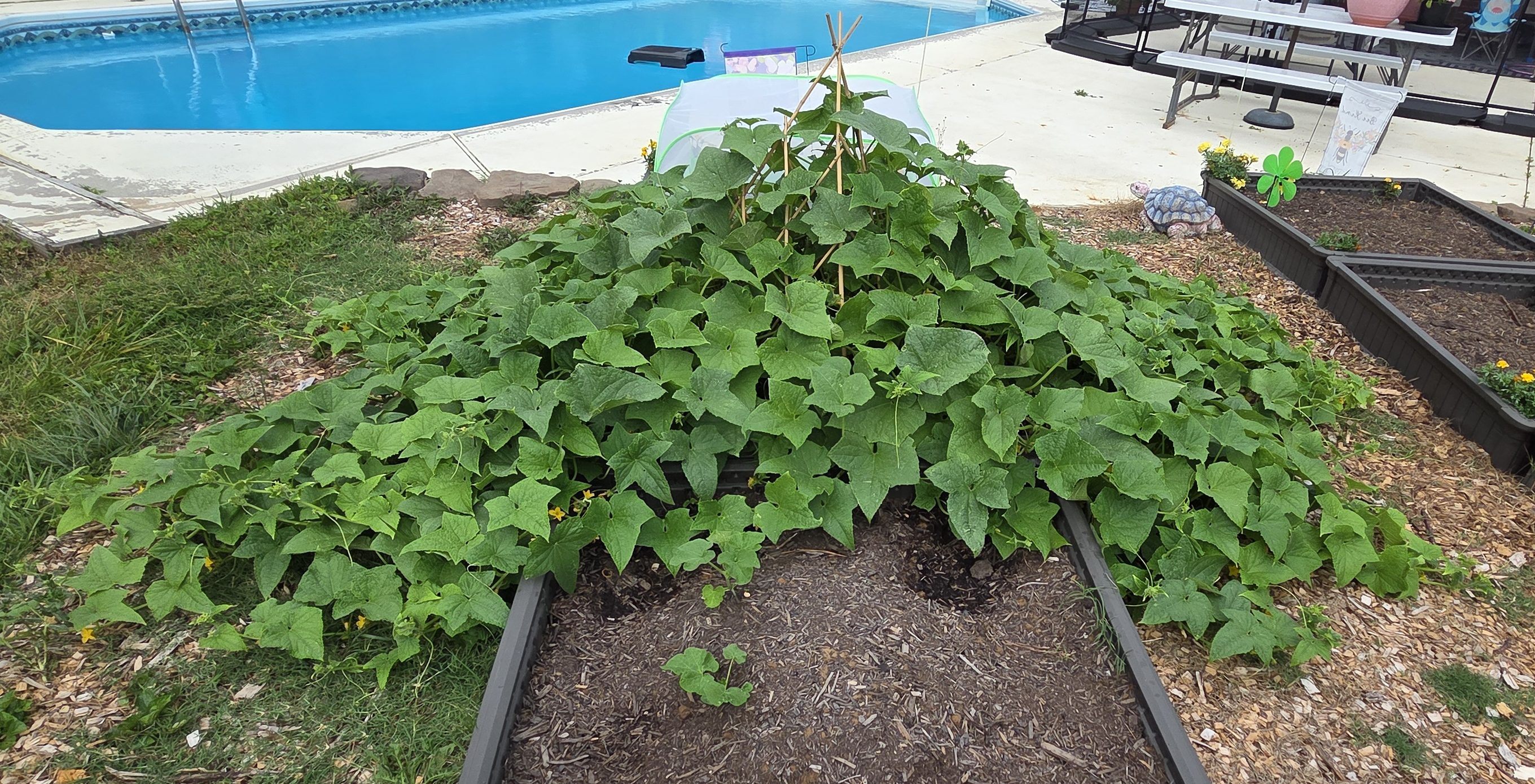
Cucumbers will take over all the land you give them.

A potato begins with another potato.

Broccoli doesn’t magically appear as a perfect green crown.

Pumpkins require space, water, sunshine, pollinators and an astonishing amount of vine.

Sometimes crops fail.

Sometimes rabbits eat them.

Sometimes bugs arrive before you do.

And sometimes you walk outside, pull dinner out of the dirt and think:

I made that.

Well, technically nature did most of the work.

But I helped. (In my Shake-n-Bake Girl voice.)

Self-Sufficiency Doesn’t Have to Mean Self-Sufficient

Unfortunately, I think we’ve made the idea of self-sufficiency unnecessarily intimidating.

You don’t need 40 acres and a mule.

You don’t need a barn.

You don’t need to raise livestock or give up electricity and start churning butter. (Unless you want to?)

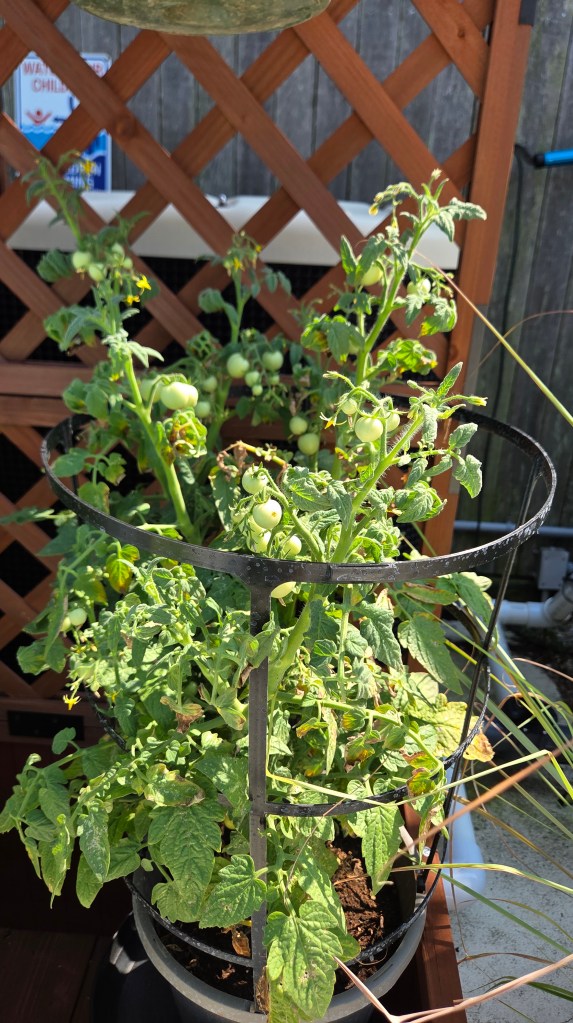
Self-sufficiency can be a tomato plant on an apartment balcony.

A thriving tomato plant with green fruits growing in a circular black planter, surrounded by leafy green foliage, against a wooden lattice backdrop.

It can be six hens in a suburban backyard.

It can be learning to bake bread from scratch.

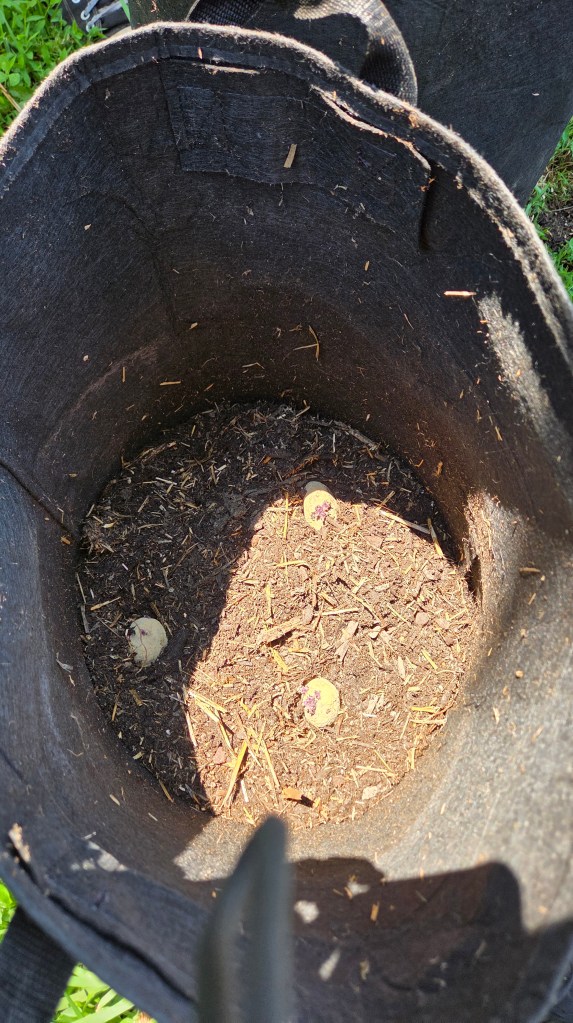
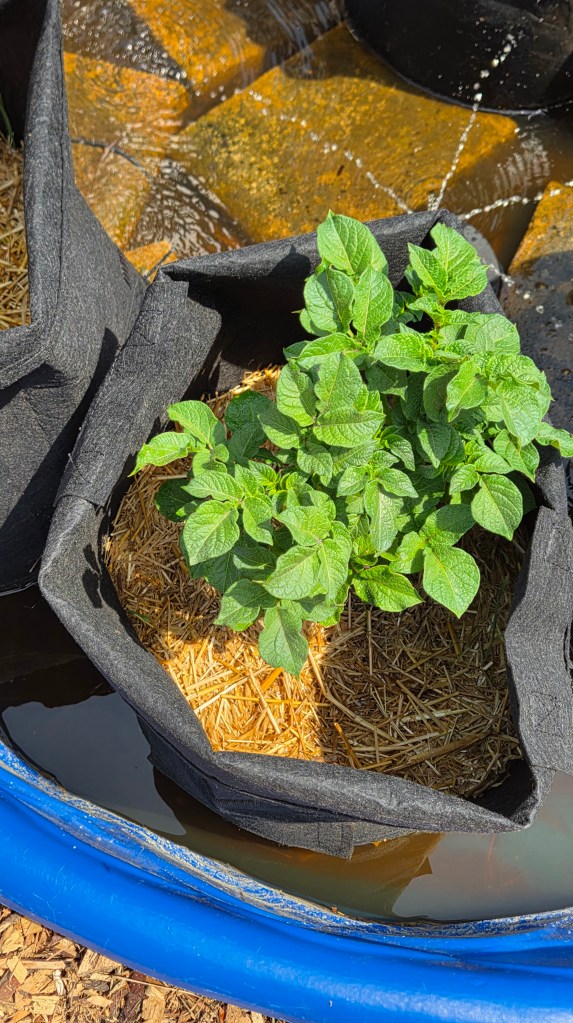
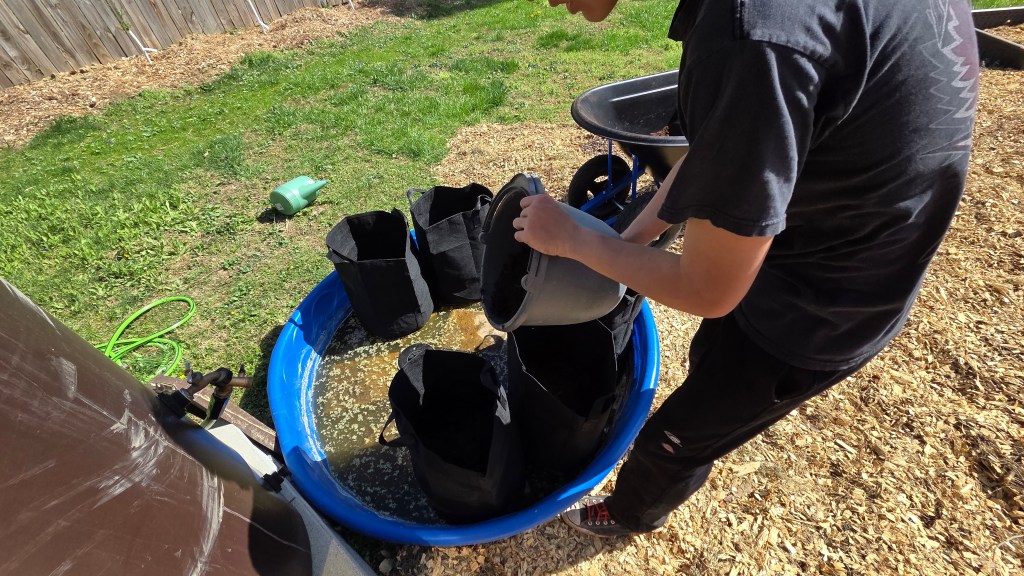
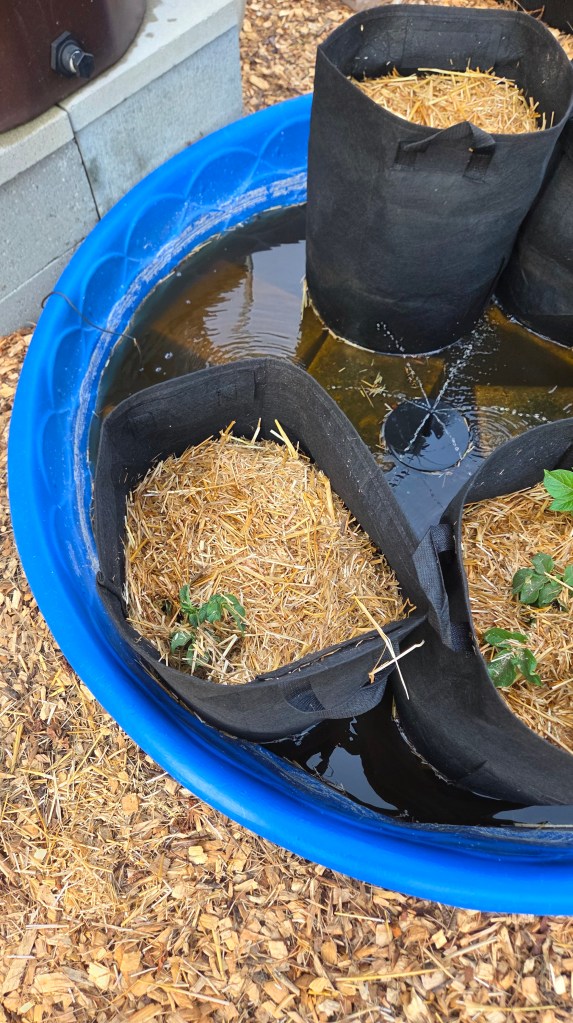
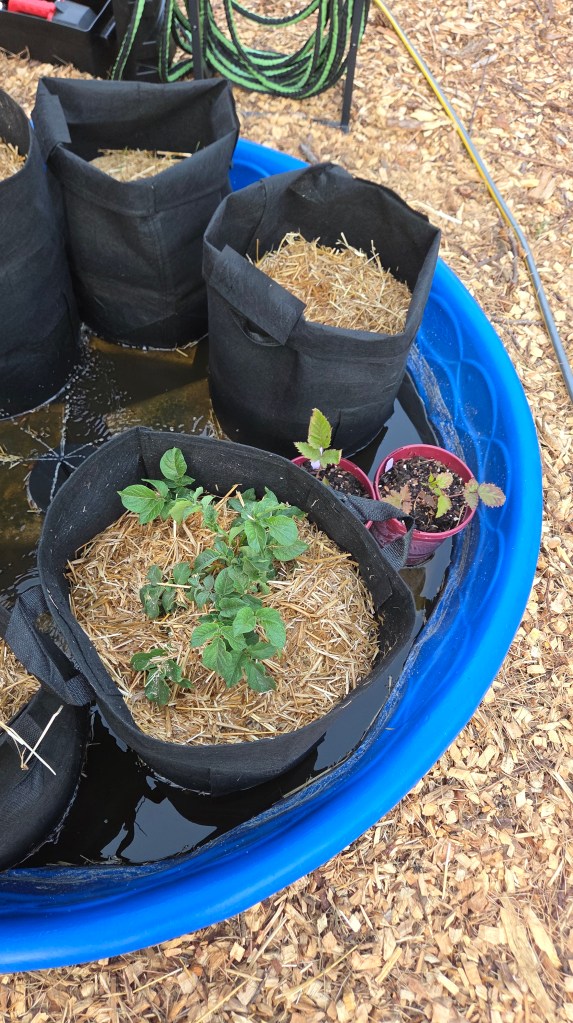
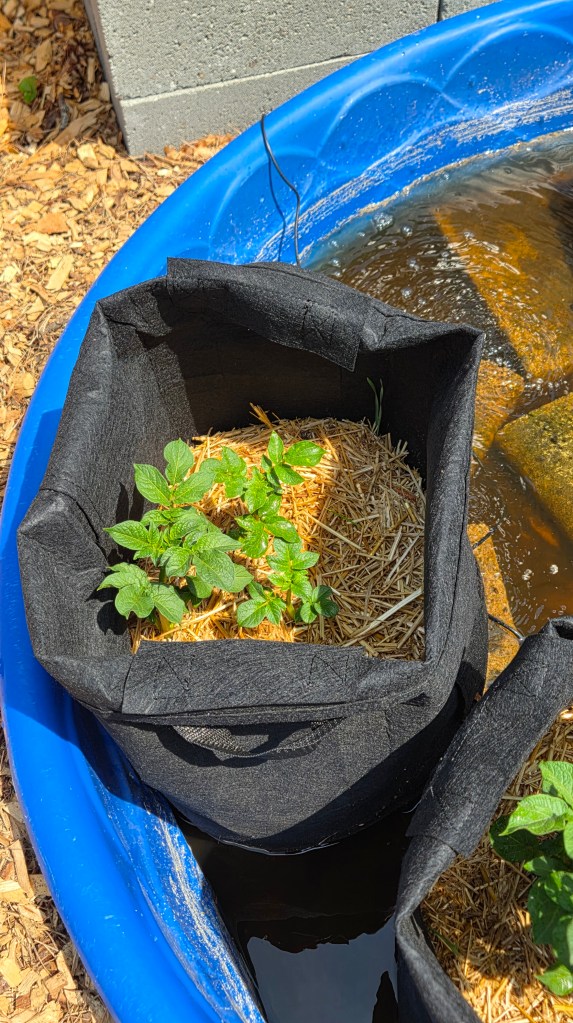
It can be growing potatoes in a 15-gallon fabric bag.

A close-up view inside a black fabric grow bag showing three small, round, speckled eggs resting on soil with some organic matter.

It can be planting an apple tree knowing you will wait years for the first apple.

It can be making pickles from cucumbers you grew yourself.

Every one of those things teaches us something our grandparents and great-grandparents largely understood as part of ordinary life:

Food comes from somewhere.

Someone has to grow it.

Someone has to raise it.

Someone has to harvest it.

Someone has to prepare it.

Then There’s Gratitude

That’s where Thanksgiving makes this experiment particularly meaningful to me.

Thanksgiving is supposed to be about gratitude.

It’s remarkably easy to say grace over a table filled with food and hurry along to get to the football game.

It’s a little different when you’ve watched some of that food grow. When you have nurtured it.

I planted these potatoes.

I watered those sweet potatoes through August and covered them every night to keep the rabbits at bay.

I watched that pumpkin develop from seeds my grandchildren pressed into the gound.

I fought the bugs for those green beans.

I planted those tiny carrot seeds and waited and waited and waited.

Suddenly our food represents time.

And work.

And weather.

And soil.

And water.

And a little bit of luck.

And God. (or Earth Mother, Gaia, Pan, Mother Nature, Anima Mundi. It is hard not to feel the presence of a higher power with my hands in the dirt. No matter what name you choose.)

Maybe growing food doesn’t just make us more self-sufficient.

Maybe it makes us more grateful.

105 Days

So that’s the challenge.

Between now and November 26, I’m going to keep asking one question:

How much can I produce for my Thanksgiving table?

Some things will work.

A lush green garden bed densely covered with sprawling vines and leaves, situated near a swimming pool. In the background, there are picnic tables and decorative garden features, including a turtle statue and flowers.

Some undoubtedly will NOT.

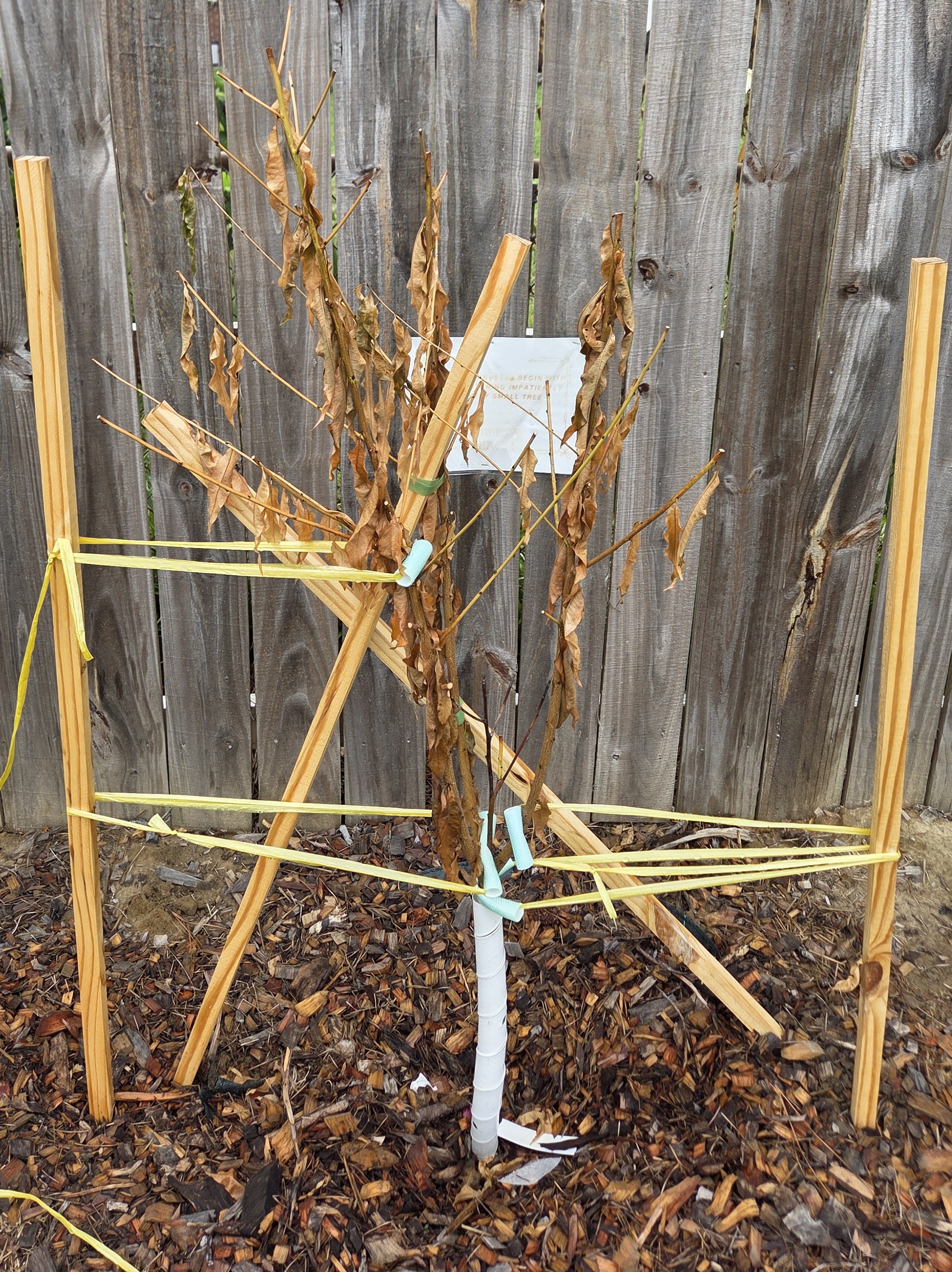
A small, wilted tree with brown leaves is supported by wooden stakes and tied with colorful bands in a garden setting.

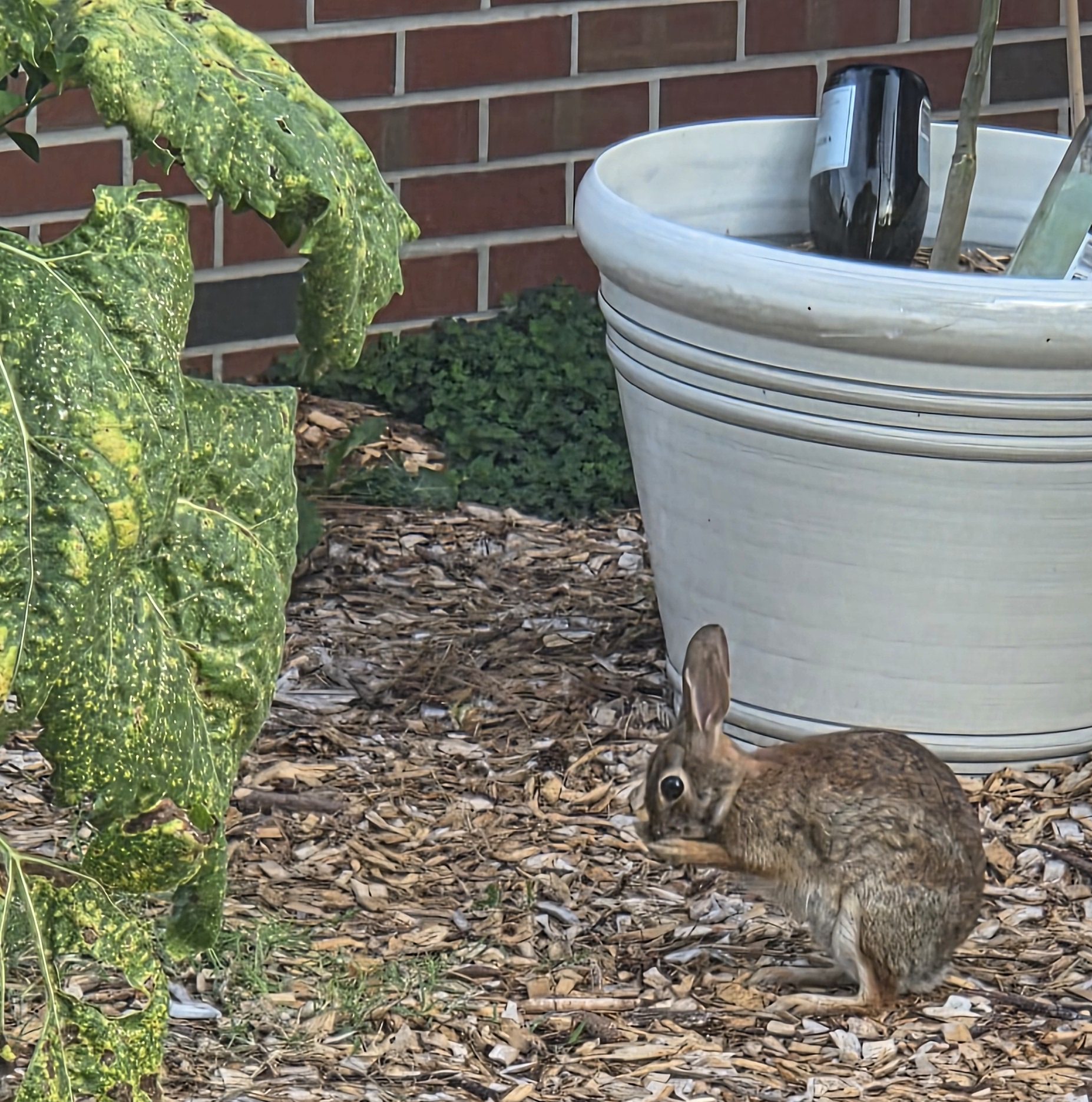
The rabbits will definitely get a vote.

A rabbit sitting on the ground among wood chips near a large white flower pot, with a leafy plant nearby.

The weather certainly will do what I don’t want it to.

Still, on Thanksgiving Day, we’ll take inventory.

How many things on that table came from our own backyard?

How many were made from scratch?

How much did we learn?

Did knowing where some of our food came from change the way we felt about the meal?

I suspect it will. I hope it will.

Because the Thanksgiving Garden isn’t really about producing dinner.

It’s about understanding just how much goes into producing dinner and being just a little more Thankful for every bite of it.

105 days to go.

Time to plant more carrots.

Tomorrow the Adventure Continues…


A yellow smiley face with the text 'slow down and smile' around it.

You Say Potato, I say Potato

Still we are waiting on Ford to decide what, if anything, they’re going to offer regarding the catastrophic engine failure in our RV. Waiting is uncomfortable. I like addressing problems, making plans, and moving forward. Instead, all I can do is tend the things I can control and let time do its work. I DO believe that not rushing the process is the correct play. Right? Weโ€™ll see, I guess but there is no rush at this point so we practice our patience.

Which leads me back to potatoes, of course.

First, it was the sweet potatoes that were forgotten in the RV, left for dead, only to sprout and become the beginning of a new crop. Now it’s the more standard baking, boiling, mashing sort of potato.

Maybe potatoes have something to teach me.

When people think about a Victory Garden, they often picture shelves full of canned tomatoes or rows of corn. Those have their place, but to grow real calories, potatoes rule. They’re inexpensive, surprisingly nutritious, and produce a lot of calories in a small space. Entire civilizations have depended on them.

The Irish Potato Famine didn’t just devastate and change Ireland it also helped reshape America as millions crossed the Atlantic looking for a new beginning. It’s amazing to me that class struggle and societal evoloution can be so wrapped into something as ordinary as a potato. One of the many plants that have changed the course of history.

Thought Iโ€™d take a crack at growing some potatoes.

This year was my own first serious attempt.

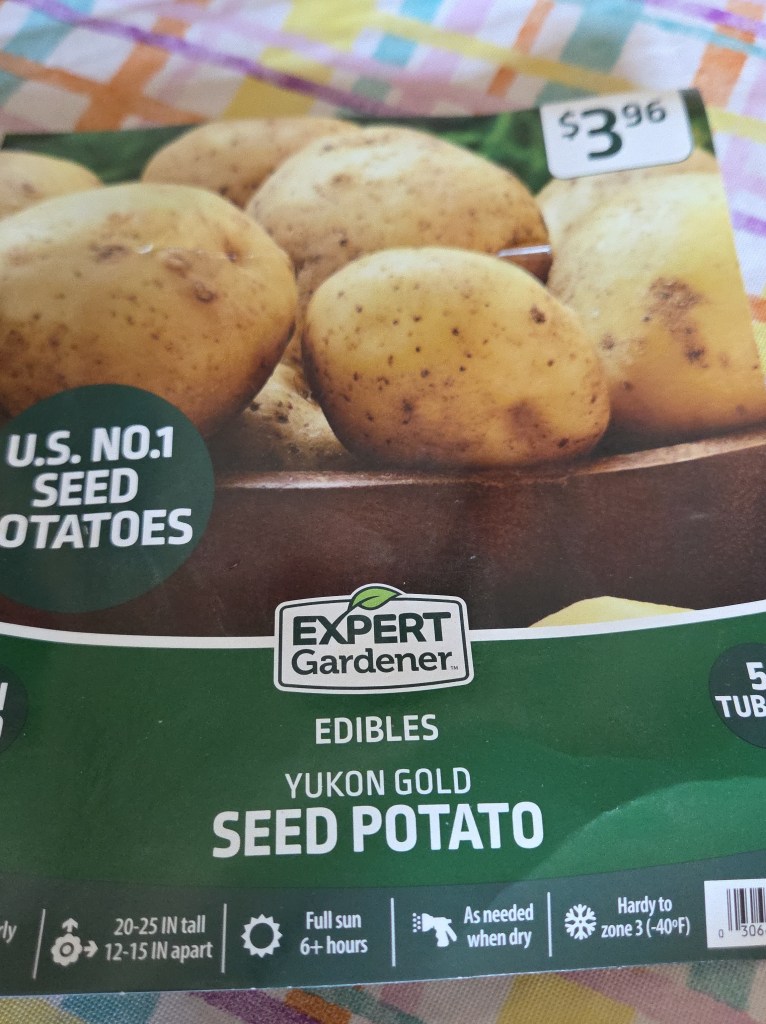
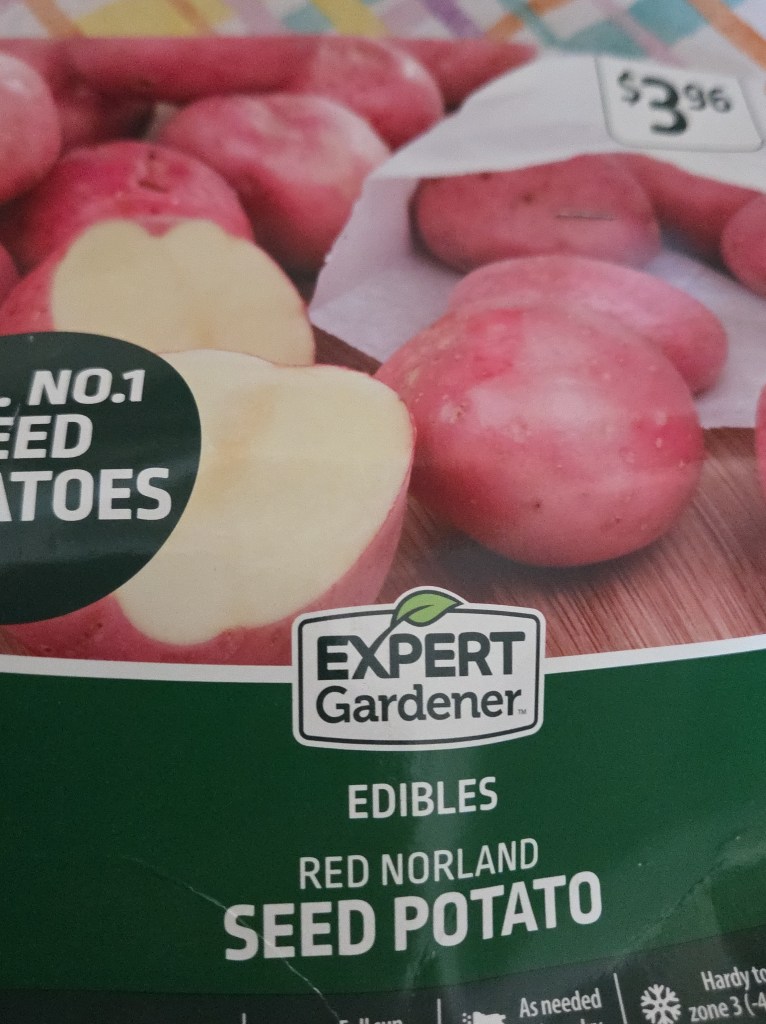
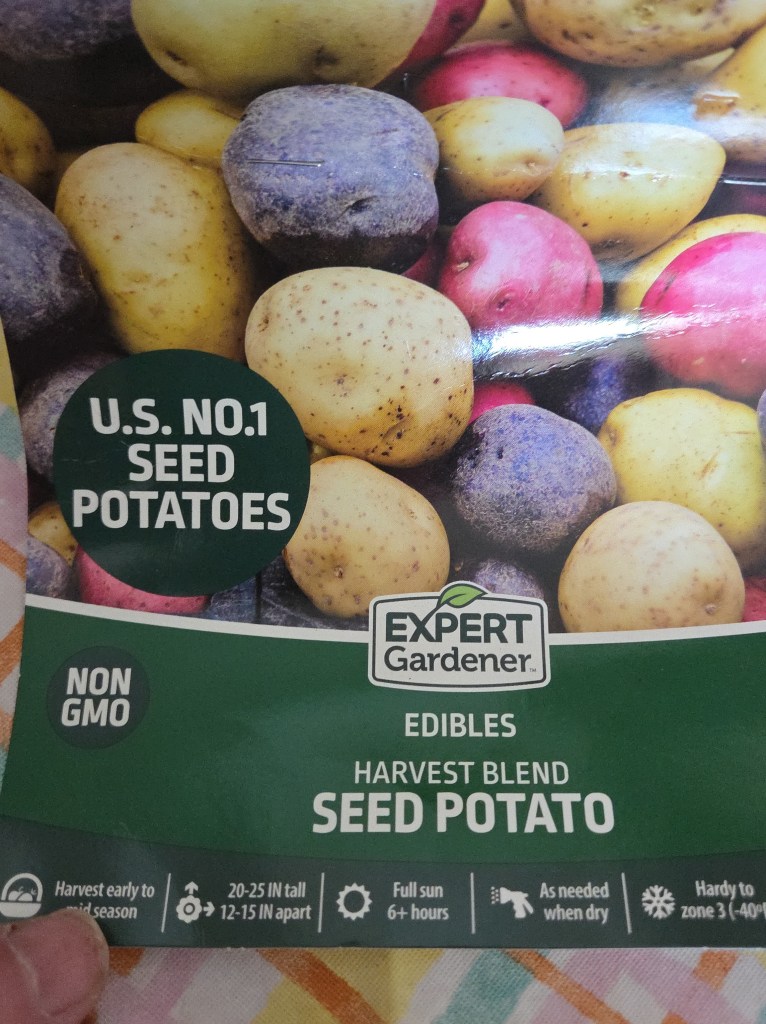
I got some seed potatoes from Walmart. They looked good to me with some sprouting. I did maybe leave them in the bag a little longer than I would have liked.

I planted Yukon Gold, Red, and Early potatoes in grow bags. I had visions of overflowing harvests. Mountains of potatoes. Enough to make every gardening YouTuber proud.

Instead, I mostly grew beautiful potato plants.

When harvest day finally came, there weren’t nearly as many potatoes hiding beneath the soil as I’d imagined. Gardening has a funny way of humbling you.

But here’s the thing…

I don’t remember being disappointed.

I remember time with two of my grandkids.

Watching little hands dig through the soil like they were searching for pirate treasure. Every potato, even the marble-sized ones, was greeted with excitement. “There’s another one!” became the soundtrack of the afternoon.

The harvest wasn’t measured in pounds.

It was measured in smiles.

The plate sitting on my counter won’t feed the neighborhood, but every one of those potatoes represents something I didn’t know a few months ago.

Next batch I’ll do better.

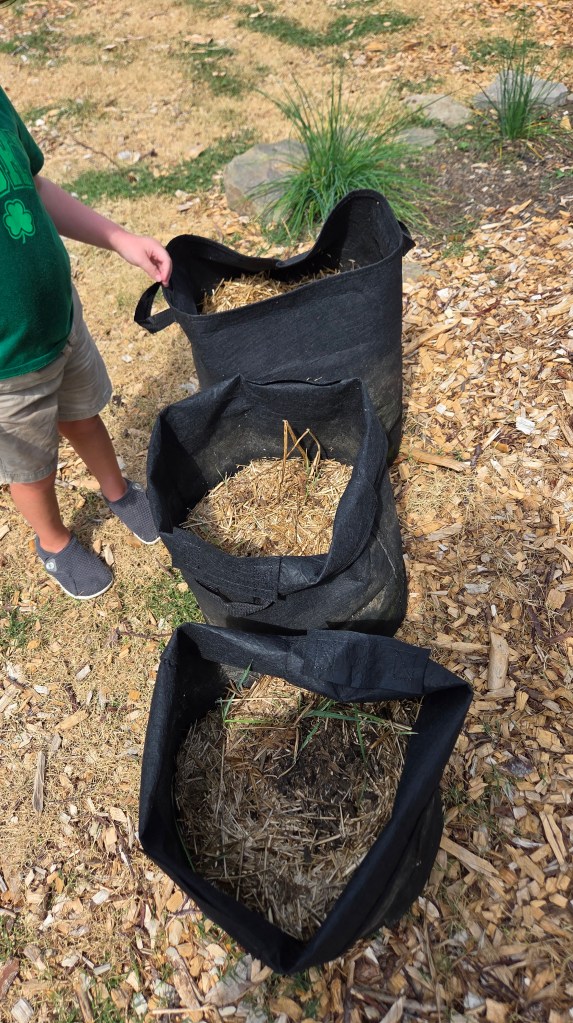
I have some larger grow bags now. Iโ€™ll adjust the soil. I’ll add more soil at the right times. I’ll experiment with different varieties. I’ll probably double the number of grow bags. That’s how gardening works. Every season teaches you something if you’re willing to pay attention.

They say, gardens are good for people like me.

They force patience.

You can’t argue with a potato into growing faster. You can’t tug on the leaves to make the harvest bigger. You plant, you water, you feed, you fight with the rabbits, you shake your fist at the squirrels,  you wait, and you trust that today’s investment will eventually become tomorrow’s harvest.

Sometimes the reward is a plate full of potatoes.

Sometimes it’s a few minutes with your grandchildren.

And sometimes it’s simply learning that not every season is about abundance. Some seasons are about preparing you for the next one.

Tomorrow the Adventure continues.